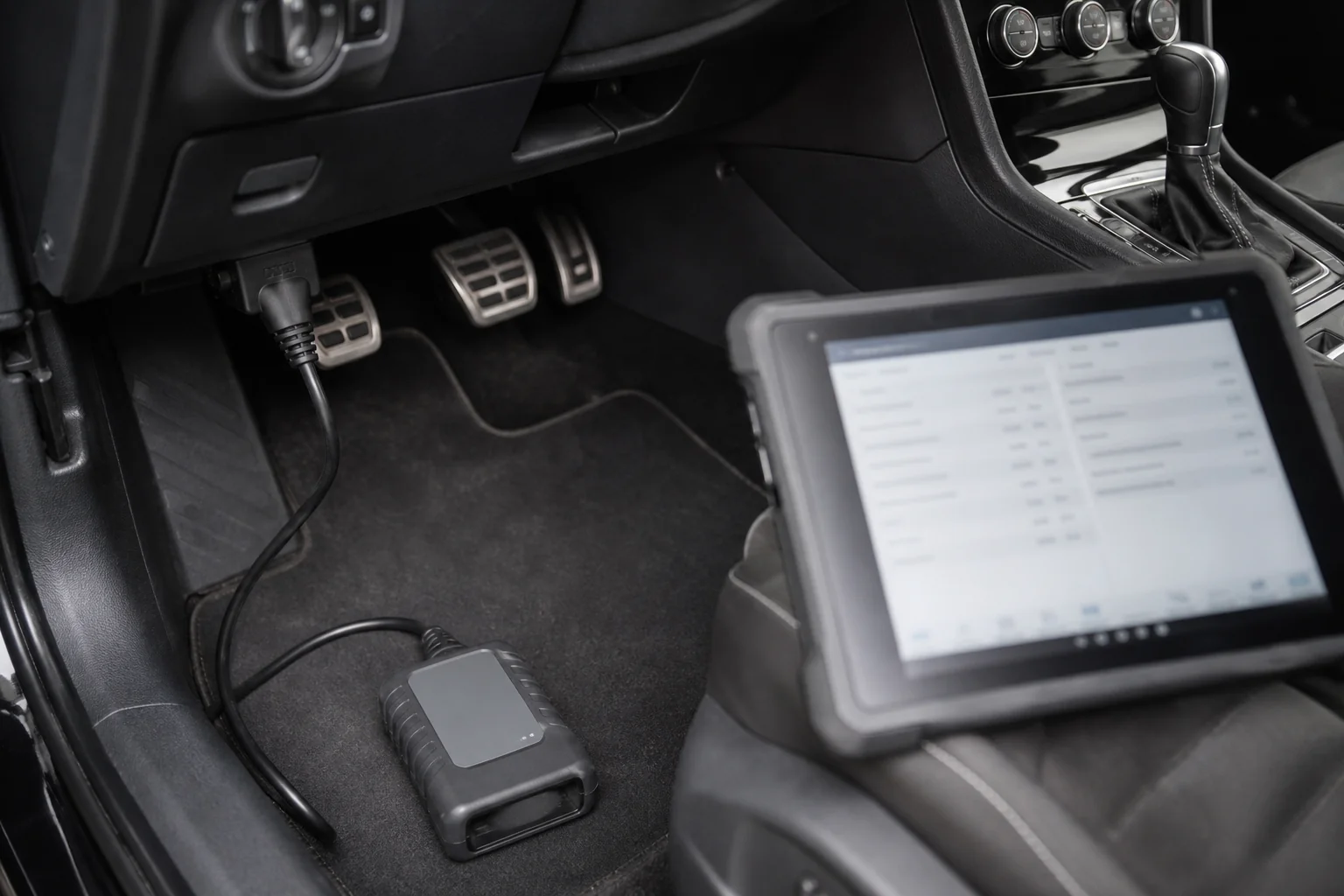
No dashboard light says "remapped" — you have to check. Ask the seller directly and look for tuner paperwork or a spec sheet. An ECU read compared against the factory file (checksums/CVN comparison) is the most reliable technical check; a dyno run against the factory power figure is the practical one. Drive-feel clues — unusually strong mid-range for the engine size — are suggestive, not proof. If you already own the car, a professional diagnostic session (from £40 at FLR) can tell you what is in the ECU. An undeclared remap you did not know about still needs declaring to your insurer once you do know.
Why an Undeclared Remap Matters
Before the how, the why. A remap is not a sticker — it changes how the engine is fuelled, boosted and load-limited, and in the UK it is a material modification. If you buy a tuned car without knowing:
- Your insurance may be invalid — insurers expect modifications to be declared, and "I didn't know" is a weak position in a claim investigation. Once you become aware, you must declare it. Our remap insurance guide covers the details.
- Warranty claims are at risk — a manufacturer or extended-warranty provider who finds tuned software can decline powertrain claims.
- You do not know the quality of the file — a well-written custom map from a reputable tuner is one thing; a generic file flashed cheaply five owners ago is another entirely.
- Maintenance assumptions change — a tuned engine works its clutch, turbo and DPF differently. Knowing what the car runs lets you maintain it accordingly.
None of this means a remapped used car is a bad buy. Some of the best used buys are honestly tuned cars with paperwork. The problem is not the map — it is not knowing.
Start With the Seller — The Right Questions
Cheapest check available: ask. But ask well. "Has it been remapped?" invites a reflexive no. Better questions:
- "Has the car had any software or performance work at any point — even by a previous owner?" — widens the net beyond their ownership
- "Who services it, and do you have all the receipts?" — a tuner invoice sometimes hides in the service folder
- "Was it bought from an enthusiast?" — modified cars tend to travel between enthusiasts
- "Is it declared on your current insurance?" — a yes here is actually a good sign: an honest, documented modification
Watch for the shrug that follows. A seller who says "it might have been done before me, I honestly don't know" is telling you to verify. A dealer selling a trade-in usually genuinely does not know — which is precisely why the technical checks below exist.
Check the Paperwork and Spec Sheet
Reputable tuners leave a paper trail. Look for:
- A tuner invoice or spec sheet — good workshops (ours included) hand over a written record of the stage, the before/after expectations and the date
- Window stickers or key fobs from tuning brands — often left on deliberately as a badge of honour
- Dyno printouts in the history folder — nobody dynos a stock car for fun
- Insurance documents showing a declared modification from a previous keeper
Absence of paperwork proves nothing — plenty of maps were flashed with no receipt — but presence of it answers the question immediately and tells you the quality of the work.
The Reliable Check — Reading the ECU
The definitive answer lives in the ECU itself. A professional tool reads the software identification from the engine ECU and compares it against what the factory shipped:
- Calibration Verification Number (CVN) — effectively a checksum of the calibration. If the CVN does not match the factory value for that software version, the file has been altered. This is the same class of check dealers use, covered in depth in our remap detection and dealer scans guide.
- Software version and checksum comparison — tuned files often carry modified checksums or version identifiers that do not match factory records for the VIN.
- Flash counters — some ECUs log how many times they have been written. A counter higher than expected for the car's service history suggests aftermarket flashing.
Two honest caveats. First, some tuning methods are harder to spot than others — a well-executed map with corrected checksums will not announce itself to a basic scan. Second, a legitimate dealer software update also changes version numbers, so the reading needs interpreting by someone who knows what factory updates look like. That interpretation is exactly what a diagnostic session at FLR — from £40 standalone — gives you: we read what the ECU reports and tell you plainly what it means.
The Practical Check — Put It on a Dyno
Software checks tell you whether the file changed; a rolling road tells you what the car actually makes. Dyno a car that left the factory with, say, 150 PS and see meaningfully more at the wheels — beyond normal measurement tolerance — and you have your answer regardless of what the ECU claims about itself.
The limits: dyno time costs money, healthy engines vary a few percent either way, and a tired engine that dynos low tells you about condition, not calibration. Use a dyno when the stakes justify it — an expensive performance car, a warranty dispute, or a seller whose story does not add up. For most used-car checks, the ECU read is faster and cheaper.
Symptoms of a Tuned Car — What Your Backside Can Tell You
Suggestive, never conclusive, but worth knowing on a test drive:
- Mid-range punch beyond the spec sheet — the classic sign. A modest diesel that surges hard from 1,800rpm is behaving like a tuned one.
- Torque arriving earlier and harder than the same model you drove elsewhere — back-to-back comparison is powerful if you can get it
- Overly sharp throttle calibration — some tuned files make the first inch of pedal travel dramatic
- Smoke under hard acceleration on a diesel — can indicate an aggressively (or badly) fuelled map, or just a worn engine; either way, investigate
A word of caution in the other direction: a genuinely well-written map can be subtle. Plenty of quality Stage 1 cars just feel "healthy". Drive-feel raises the question; the ECU read answers it.
The Risks of Buying an Undeclared Remap
Suppose the checks come back positive — the car is tuned and the seller never mentioned it. What you are weighing:
- Unknown file quality — you cannot tell from the driver's seat whether it is a careful custom calibration or a generic flash with thin margins
- Insurance exposure — from the moment you know, you must declare it, which may adjust your premium
- Warranty and goodwill — a tuned file discovered during a dealer visit can affect claims, covered honestly in our detection guide linked above
- Component wear you cannot see — a tuned car driven hard works its clutch and turbo harder; factor it into the price you offer
The good news: none of this is fatal. A remap is software, and software can be removed. We read the ECU, archive whatever is on it, and can return the car to a factory-stock calibration — the full picture is in can a remap be reversed?. Buyers regularly use this as a negotiation point: knock the uncertainty off the price, then either keep the map (declared, once verified) or have it returned to stock.
Already Own the Car? Here Is Your Checklist
If you are reading this about the car on your driveway rather than one you are viewing:
- Dig through the history folder — invoices, dyno sheets, insurance schedules from previous keepers
- Book an ECU read — twenty minutes of professional time answers the question definitively in most cases
- If it is tuned: declare it to your insurer — immediately, whatever you decide to do next
- Decide: keep, verify or revert — a good file on a healthy car is worth keeping (declared); an unknown file is worth replacing with a properly written one or returning to stock
- If anything drives oddly — flat spots, smoke, hesitation — book fault finding rather than guessing; a bad old map and a mechanical fault can wear the same disguise
When Not to Worry
Perspective, from a workshop that sees both sides: most used cars are not remapped, and most remapped used cars were tuned honestly by owners who loved them. If the paperwork is present, the file came from a reputable tuner, the car drives cleanly and the modification is declared — a tuned used car can be a better-sorted buy than a neglected stock one. The checks in this guide are not about avoiding remapped cars. They are about never paying stock-car money for unknown software, and never carrying insurance risk you did not choose.
Next Steps
If you want a definitive answer on a car you own or are about to buy, book a diagnostic ECU read — from £40, at the Haslingden workshop just off the A56, or mobile across Lancashire via the M65/M66 network. Send the registration through our contact page and we will tell you what is in the ECU, what it means, and what your options are — keep it, rewrite it properly, or return it to stock. More straight answers in the Knowledge Centre.
Checking For a Remap — Common Questions
The reliable method is a professional ECU read comparing the calibration identifiers — CVN, checksums, software version — against factory values for your VIN. Paperwork from a previous owner and a dyno run against the factory figure are the supporting checks. Drive-feel alone is suggestive, not proof.
Usually not. Consumer code readers show fault codes and basic data, not calibration comparisons. Detecting altered software needs tooling that reads software identification and knows what the factory values should be — and a person who can interpret legitimate dealer updates versus tuning.
A private seller should answer questions honestly, and a dealer is bound by consumer law on misdescription — but in practice many sellers genuinely do not know the car is tuned. That is why verification falls to the buyer. Ask direct questions and get the ECU read if it matters to you.
Declare it to your insurer straight away — once you know, you must disclose it. Then decide whether to keep the map, have it verified and rewritten properly, or return the car to stock. A diagnostic read tells you what you are working with before you choose.
Yes. A remap is software, and the car can be returned to a factory-stock calibration. If the original file was never archived by whoever tuned it, a correct stock file for the exact ECU revision is used instead. The car then runs exactly as the manufacturer intended.
An undeclared modification can invalidate a policy — that is exactly the risk. If you genuinely did not know, your position is better than a deliberate non-disclosure, but from the moment you become aware you are expected to declare it. Do not sit on the knowledge.
Increasingly, yes — manufacturer diagnostic systems compare calibration verification numbers against factory records, and some brands log mismatches against the VIN. If warranty matters to you, assume tuned software can be seen during a dealer visit.
Not necessarily. An honestly tuned, well-documented car from a reputable tuner can be a great buy. The problems are unknown software, undeclared insurance status and hidden wear — all of which the checks in this guide surface before you agree a price.