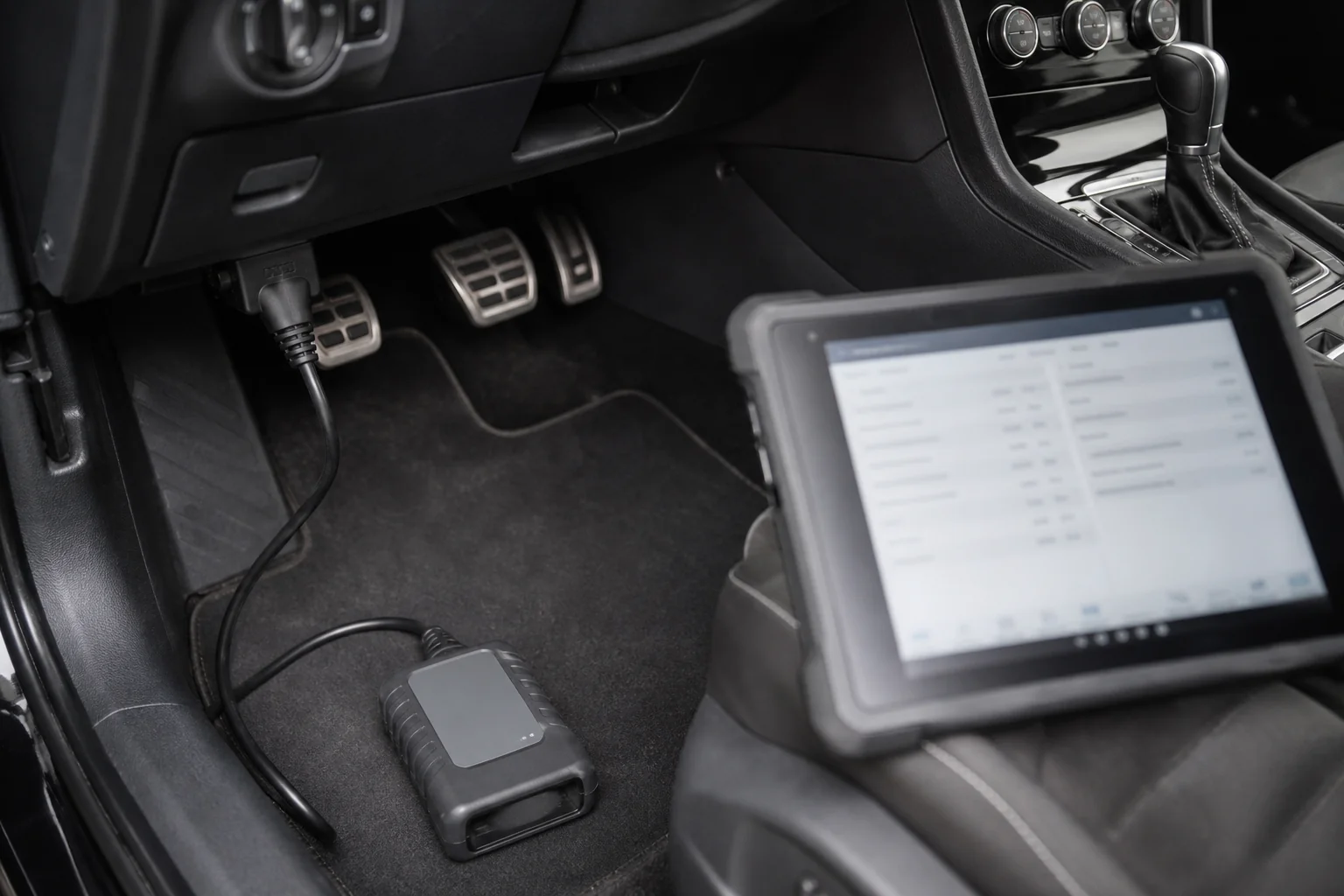
Can dealers detect a remap? Yes. Modern dealer tools compare your ECU's calibration checksums against the manufacturer's records, and a mismatch flags modified software. VW Group goes further with the TD1 marker — a flag recorded on the manufacturer's central system, not just in the car, so returning to stock does not remove it. Detection is most likely during warranty claims, software update campaigns and recalls. Our honest advice: if you rely heavily on manufacturer warranty, weigh that risk before tuning — and never let anyone tell you detection is impossible.
The Short Answer
Modern dealer diagnostic equipment can identify modified ECU software, and on some brands the discovery is recorded permanently on the manufacturer's own servers. Any tuner who tells you "the dealer will never know" is either behind the times or hoping you will not read pages like this one.
That does not mean every remapped car gets caught — most are never checked in a way that would reveal anything. But the question you should be asking is not "can they detect it?" (yes) or "will they definitely detect it?" (no). It is "what happens to me if they do, and am I comfortable with that?" The rest of this guide gives you what you need to answer that honestly.
This matters most for cars still under manufacturer warranty — if that is you, read this alongside our remap and warranty guide.
How Dealer Tools Actually Detect a Remap
When your car goes on a dealer's diagnostic system, the tool can read identifying information from the ECU: software version numbers and, crucially, checksums calculated from the calibration data itself. A checksum — often reported as a CVN (Calibration Verification Number) — is effectively a fingerprint of the software. Change even a small part of the calibration and the fingerprint changes with it.
The dealer tool compares what it reads against the manufacturer's central database of approved software versions for your exact vehicle. If your ECU reports a calibration fingerprint that does not match any factory-approved file for that VIN, the software has been modified. It is that simple, and it does not require anyone to suspect anything — the comparison can happen automatically whenever the car is plugged in for a service, update or warranty investigation.
Some manufacturers also log additional breadcrumbs: flash counters that increment each time the ECU is written, records of which tool performed the write, and timestamps that do not line up with official dealer visits. Individually these are circumstantial; together they paint a clear picture for a warranty engineer who is looking.
The VW Group TD1 Marker, Explained Honestly
VW Group (Volkswagen, Audi, SEAT, Škoda, Cupra) is the brand family most owners ask about, because it operates the best-known detection scheme. When a VW Group dealer's diagnostic system identifies non-standard software on an ECU, it can apply a marker — commonly known as TD1 — against the vehicle's record.
The critical point that gets misunderstood: the TD1 flag is recorded on the manufacturer's central system, tied to the VIN — not just inside the car. That has two consequences worth sitting with:
- Returning to stock does not remove it. Once the flag exists on VW's servers, flashing the original file back into the ECU changes nothing about the record. The marker notes that non-standard software was found on that vehicle, and it stays.
- It follows the car, not the owner. A used car you are buying could already carry a TD1 flag from a previous owner's tuning history — one reason a pre-purchase check matters. Our guide on how to tell if a car is remapped covers what you can and cannot find out.
In practice, a TD1 marker signals to any VW Group dealer that the vehicle has run modified software, and the manufacturer can use that to decline warranty goodwill on powertrain components. It does not make the car illegal, unroadworthy or unsaleable — it is a warranty and goodwill matter. But it is permanent, and honesty demands we say so plainly.
Other manufacturers operate their own versions of software verification, with varying rigour. Assume that any mainstream brand built in the last decade can identify modified calibrations when it checks; the difference is mostly in how systematically each brand looks and records.
Why Returning to Stock Doesn't Always Erase the Evidence
We keep every customer's original factory file for life, and we can return any car we have tuned to its exact factory calibration. That reversibility is real and genuinely useful — for resale, for insurance changes, for peace of mind. Our guide on whether a remap can be reversed covers the mechanics.
But reversibility and invisibility are different things, and conflating them is where owners get burned. After a return to stock:
- Central flags remain. If a TD1-style marker was applied while the tune was on, it stays regardless of what is in the ECU now.
- Flash counters do not rewind. On ECUs that count write cycles, the counter reflects every flash — including the return to stock itself.
- Write history can persist. Some ECUs retain traces of when and how they were last programmed, which may not match any official dealer record.
The honest summary: returning to stock restores the factory behaviour of the car completely. It does not guarantee the factory history. If the car was never checked while tuned, a return to stock usually means nothing was ever flagged — but "usually" is the strongest word we can honestly use.
When Dealers Actually Check
Dealers do not run forensic software audits on every car that comes in for an oil change. In practice, detection risk concentrates around specific events:
- Warranty claims on the powertrain. A failed turbo, gearbox or engine component under warranty is exactly when the manufacturer has both the motive and the process to verify the software before paying out.
- Software update campaigns and recalls. When the dealer flashes an official update, the tool interrogates the existing software first — a modified file can be flagged, and the update will overwrite your tune anyway.
- Goodwill requests outside warranty. Asking the manufacturer to contribute to a repair invites the same scrutiny as a warranty claim.
- Routine services on some brands. Increasingly, connected diagnostic systems check software versions as a matter of course whenever the car is plugged in.
Notice the pattern: the moments of highest detection risk are exactly the moments you most want the manufacturer on your side. That asymmetry is the real cost of tuning a warranty-age car, and it deserves more weight than "will they spot it at the next service?"
Honest Advice for Warranty-Age Cars
Here is the framework we give customers at the workshop, and it costs us bookings every month:
- Nearly new, long warranty left, powertrain you could not afford to fix yourself? Think hard before tuning now. The remap will still be available in two years; a declined £6,000 gearbox claim is forever.
- Final year of warranty, car has been faultless? The risk window is closing. Some owners tune now and accept the tail-end risk; others wait it out. Both are rational.
- Out of warranty? The detection question loses most of its teeth. Insurance declaration still applies in full — a remap must be declared to your insurer regardless of warranty status.
- Extended or third-party warranty? Read the policy. Many exclude modified vehicles outright, and the checksum evidence works just as well for them.
Whatever you decide, decide it on accurate information. We would rather you left our Stage 1 page without booking than booked on the belief that detection is impossible.
Detection Myths Worth Killing
- "A quality tune is undetectable." No tune is undetectable to a checksum comparison. Quality affects how well the car drives, not whether the maths matches VW's database.
- "Flash back to stock before every service and you're fine." Helps only if nothing was flagged while the tune was on, and does nothing about counters or existing markers.
- "Dealers can't be bothered to check." Often true for routine work — and reliably false the moment a warranty claim gets expensive.
- "A TD1 marker makes the car worthless." No. It affects VW Group warranty goodwill. It does not affect the MOT, legality or the car's function.
- "Tuning boxes are invisible." A box leaves no software trace, but it distorts the sensor data the ECU logs — and unusual logged values can raise their own questions. Different fingerprint, not no fingerprint.
How We Help You Make the Call
Every job at our Haslingden workshop starts with diagnostics — from £40 standalone — and an honest conversation. For warranty-age cars, that conversation includes this exact topic before any file is written. If you go ahead, you get a custom-written calibration, your factory ECU file backed up and kept for life, and a genuine return-to-stock option whenever you need it — with the detection caveats explained rather than buried.
We test on the roads around here — the M65, the A56, the climb over Grane Road — and we have tuned enough warranty-age cars from across Rossendale and wider Lancashire to know the question is never just technical. It is about your appetite for a specific, quantifiable risk. Our job is to make sure you know the real odds before you take it.
Next Steps
Still weighing it up? Read the warranty guide for the claims-and-goodwill side of the picture, and check the Knowledge Centre for quick answers on detection, insurance and reversibility. When you are ready to talk about your specific car — including an honest "wait until the warranty ends" if that is the right call — send us your registration or ring 01706 404 357.
Remap Detection — Common Questions
Yes. Dealer diagnostic tools can compare your ECU's calibration checksums against the manufacturer's database of approved software for your VIN. A mismatch identifies modified software, and no remap is invisible to that comparison.
TD1 is the marker VW Group applies when its diagnostic systems find non-standard software on a vehicle's ECU. It is recorded on the manufacturer's central system against the VIN — not just in the car — and it is used to decline warranty goodwill on powertrain components.
No. The flag lives on the manufacturer's servers, so restoring the factory file to the ECU does not remove it. Returning to stock fully restores factory behaviour, but it cannot rewrite a record that was created while the tune was detected.
During powertrain warranty claims, official software updates and recalls, and goodwill requests — the moments when the manufacturer has a financial reason to verify the software. Routine services are lower risk, though some connected systems check versions automatically.
Yes. An official update overwrites the ECU calibration, replacing your tune with the new factory file. Because we keep your original file and tune records for life, the map can be rewritten afterwards — but tell us about any dealer software work before it happens if you can.
Neither. A TD1 marker is a warranty and goodwill matter between you and VW Group. It has no bearing on the MOT or the car's legality. Remapping itself is legal in the UK provided emissions systems stay active and the modification is declared to your insurer.
It depends on how much you rely on that warranty. On a nearly-new car with years of cover left, we honestly suggest weighing the goodwill risk carefully — sometimes waiting is the smart move. On a car in its final months of cover, the calculation changes. We talk this through before every warranty-age booking.
Sometimes. Signs include software checksums that do not match factory records, unusual flash history and performance that does not match the factory spec. We can investigate as part of a diagnostic session — see our guide on telling whether a car is remapped for the full picture.