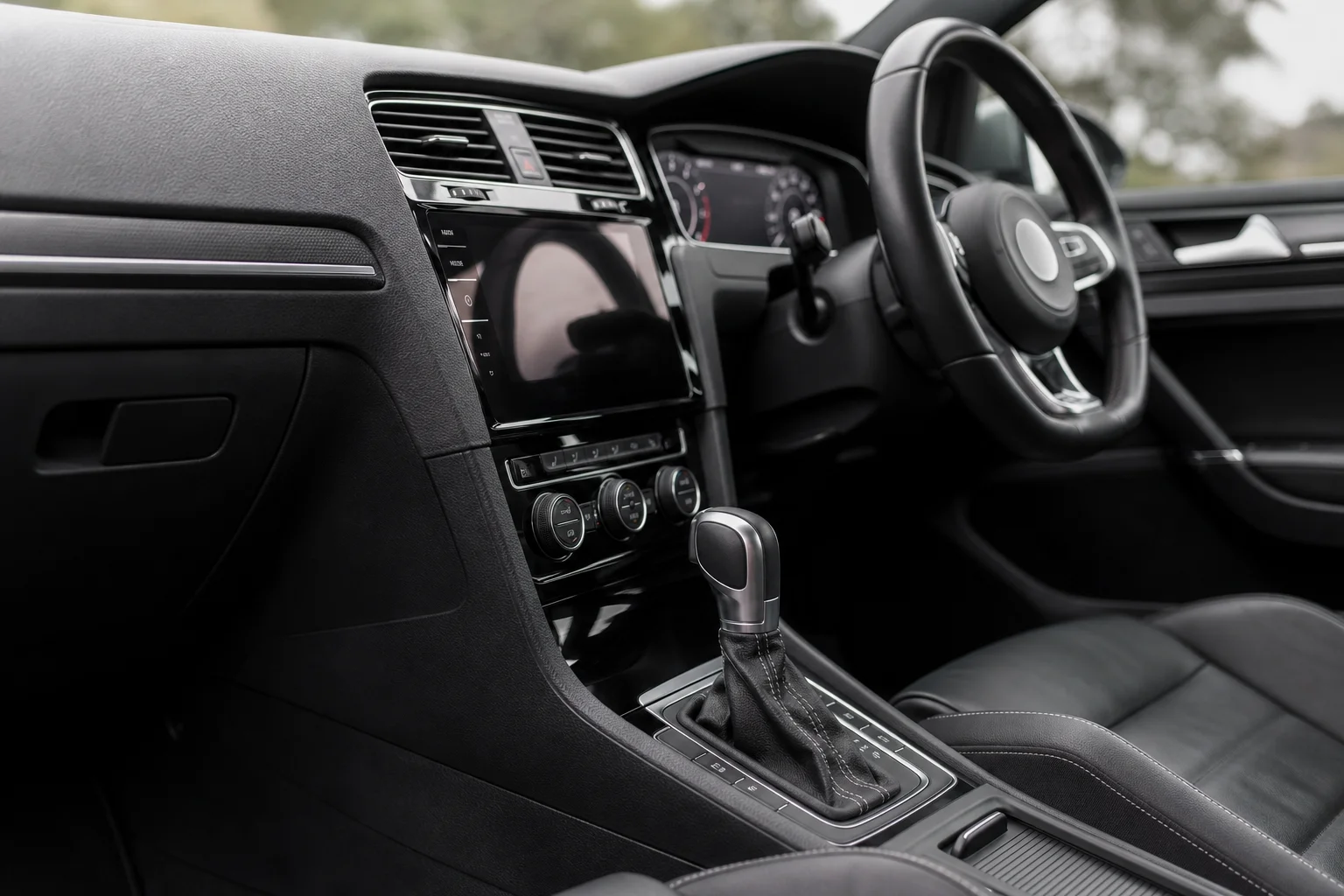
A DSG remap adjusts TCU software — shift speed, torque limits, kickdown response and launch behaviour. It does not change engine power by itself, but it unlocks drivability your factory gearbox strategy was deliberately holding back. Pair it with an ECU remap for the best result.
The Short Answer
Your DSG gearbox has its own computer — the Transmission Control Unit (TCU). It decides when to shift, how hard the clutches engage and how much engine torque the box will accept. A DSG remap rewrites that software to deliver faster, more decisive shifts and better handling of increased engine output.
At Finish Line Remaps, standalone DSG remapping is from £150. The Stage 1 ECU + DSG bundle is from £275 — saving £25 versus booking both separately. What every price includes, gearbox by gearbox, is broken down in our DSG and gearbox remap cost guide.
ECU vs TCU — What Is Actually Being Changed?
Engine remapping targets the ECU — fuelling, boost, timing and torque output. DSG remapping targets the TCU — everything the gearbox does with that torque once it leaves the engine.
Think of it as two brains that must agree. If the ECU delivers more torque but the TCU still shifts like factory software, you get hesitation, slow paddle response and the feeling the gearbox is fighting the engine on hills and overtakes.
Our Knowledge Centre explains the difference between ECU and TCU remapping in more detail — including why remapping both gives the most cohesive drive.
What Changes After a DSG Remap?
A well-written TCU calibration typically improves:
- Upshift and downshift speed — especially under partial and full throttle
- Kickdown response — less delay when you floor it for an overtake
- Paddle shift reaction — sharper manual-mode changes
- Torque limit handling — the box accepts more of what the engine delivers after an ECU remap
- Launch and pull-away — reduced creep hesitation from standstill
- Overall cohesion — engine and gearbox working as one system, not two separate departments
Many owners describe the DSG remap as the single biggest improvement to drivability — even more noticeable than the engine tune on some platforms. See DSG remap benefits in our Knowledge Centre.
Why DSG Cars Benefit Even When the Engine Feels Fine
Factory TCU maps prioritise smoothness, emissions, fuel economy and component longevity over driving engagement. That is fine for a fleet buyer in Germany; less ideal when you are pulling out of a junction on Grane Road with a queue behind you.
Even before an ECU remap, a TCU calibration can sharpen the driving experience. After an ECU remap, it becomes almost essential — the engine is delivering torque the factory TCU strategy was never designed to handle smoothly.
We develop DSG files on the same Pennine roads we test engine calibrations — the long inclines and mid-corner uphill shifts that expose lazy factory shift logic fast.
DSG-Only vs ECU + DSG Bundle
You can remap the TCU alone if the engine is staying standard — useful for owners who want sharper shifts without touching engine power. You can also remap the ECU alone, though on DSG cars we usually recommend pairing both.
The bundle approach aligns engine torque delivery with shift strategy in one visit. One calibration session, one road test, one cohesive result. Read ECU and DSG together or separately for the honest comparison.
Which DSG Platforms Can Be Remapped?
We remap VAG-group DSG and automatic gearboxes including common platforms like DQ200, DQ250 and DQ381 — found across VW Golf, Audi A3/S3, SEAT Leon, Skoda Octavia and many more.
Not every gearbox or model year is supported. Send your VRN when booking and we confirm compatibility before you commit. If your car has a known mechatronic fault or worn clutches, we will tell you — remapping a sick box is not something we recommend.
For broader gearbox tuning beyond DSG, see our gearbox tuning service.
Is a DSG Remap Safe for the Clutch?
A properly written TCU map works within the mechanical limits of your clutch packs. Problems appear when someone chases aggressive launch settings on a high-mileage box or pairs a heavy ECU tune with TCU software that ignores clutch wear.
We diagnostics first, check for existing fault codes and advise honestly if the gearbox is not a suitable candidate. Our approach matches factory safety margins — sharper and faster, not reckless.
More on clutch health in our Knowledge Centre: DSG clutch health and remapping.
What to Expect on the Day
A DSG remap follows the same professional process as an ECU tune: diagnostic health check, backup of your original TCU file, custom-written calibration, verification and handover. Most appointments take one to two hours — longer if you are booking an ECU + DSG bundle.
We save your factory software before writing anything. Reversible, like every FLR remap. Read our guide on remapping safety for the full process breakdown.
Ready to Book?
If you own a DSG car and want sharper shifts, better response and a gearbox that finally matches your engine, a TCU remap is one of the smartest upgrades available.
Request a quote with your VRN, explore can we remap your DSG in the Knowledge Centre, or call 01706 404 357.
DSG Remapping — Common Questions
Yes — a standalone TCU remap still delivers faster shifts, sharper kickdown and better paddle response on a standard engine. The biggest transformation comes when both ECU and TCU are calibrated together, but DSG-only is a valid upgrade if you want sharper gearbox behaviour without touching engine power.
Not when the map is written properly for your box and mileage. A professional TCU calibration works within clutch capacity and includes sensible launch limits. We diagnostics first and will advise if your mechatronic or clutch packs are not healthy enough to tune. See DSG clutch health.
A standalone DSG remap typically takes one to two hours including diagnostics and verification. An ECU + DSG bundle takes a similar window — we complete both calibrations in one visit. Contact us to book a slot.
DQ200 is a 7-speed dry-clutch unit common on smaller engines. DQ250 is a 6-speed wet-clutch box found on higher-torque applications. Both can be remapped when supported — calibration strategy differs because clutch design and torque capacity differ. Send your VRN and we confirm your platform.
Yes. We save your original factory TCU file before writing any calibration. You can return to stock for a dealer visit, warranty work or resale — the same reversibility as our ECU remaps.
Standalone ECU Stage 1 is from £150 and standalone DSG is from £150 — £300 separately. The Stage 1 + DSG bundle is £275, saving £25. One visit, matched calibrations, better overall result. More detail in our bundle FAQ.