Is ECU remapping safe? Yes — on a healthy, well-maintained car, with diagnostics done first and a custom-written calibration that stays within your hardware's limits. The risk is not the remap itself; it is generic files, skipped health checks and chasing numbers. Declare the remap to your insurer, keep emissions systems intact, and your factory file is always backed up for reversal.
The Short Answer
A properly carried out Stage 1 ECU remap on a well-maintained car is considered safe by reputable tuners across the UK. The ECU already controls fuelling, boost, timing and torque limits — remapping adjusts those parameters within what your hardware can support. Problems appear when someone skips diagnostics, flashes a generic file, or chases numbers with no regard for temperatures, knock or drivetrain strain.
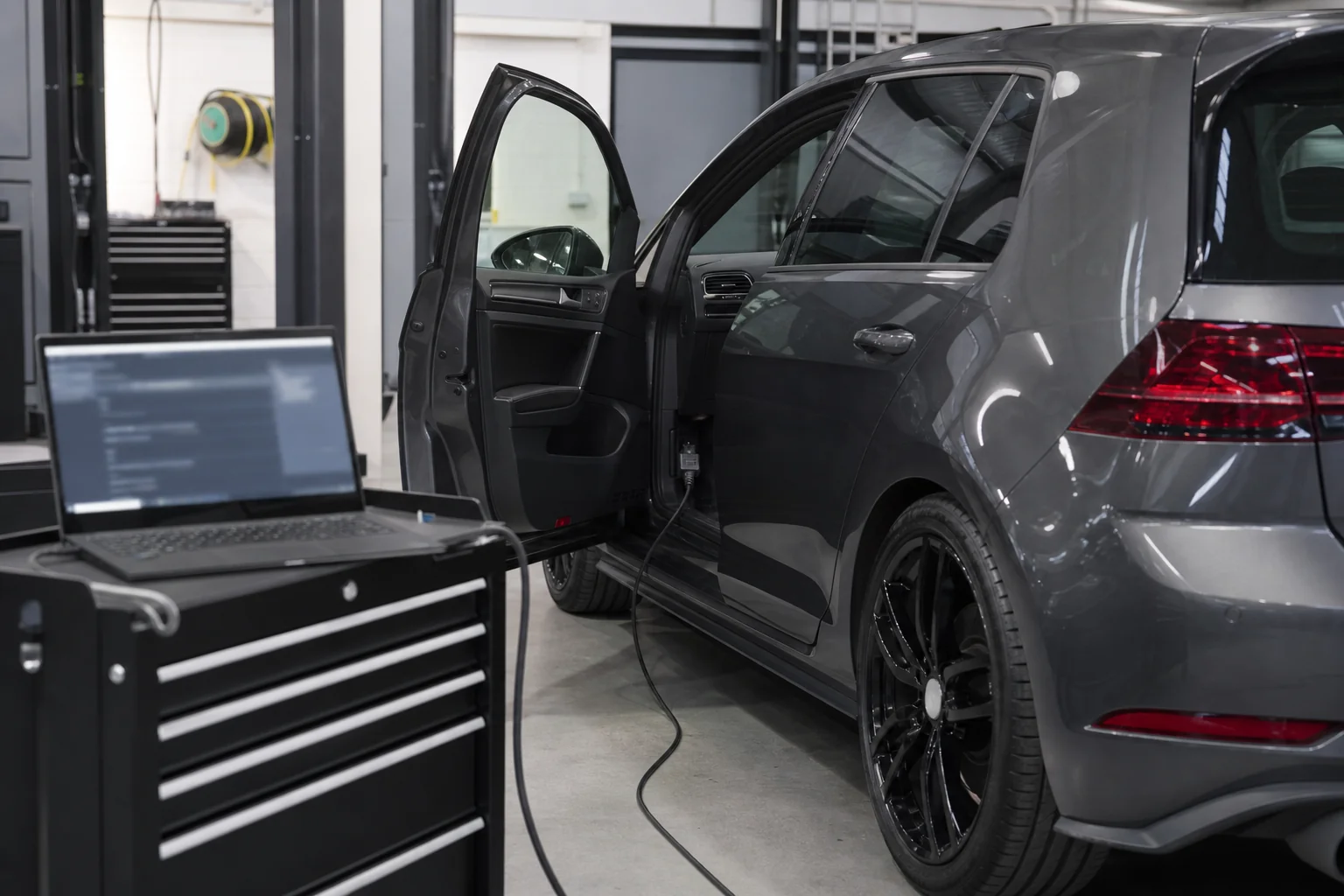
At Finish Line Remaps in Haslingden, every job starts with a full health scan. If we find a tired turbo, a blocked DPF, a slipping clutch or hidden fault codes, we tell you before any money changes hands — not after. That single step eliminates most of the horror stories you read online. For what Stage 1 actually involves on stock hardware, read our Stage 1 remap explained guide.
What ECU Remapping Actually Changes
Your car's Electronic Control Unit (ECU) is the brain that decides how much fuel, air and boost the engine gets at any given moment. Manufacturers deliberately leave headroom in the map so one file can suit different fuel grades, climates and emissions targets worldwide.
Remapping — sometimes called ECU tuning or engine remapping — rewrites that software to use more of the capability your engine already has. On a typical daily driver that might mean stronger low-down torque, sharper throttle response and smoother power delivery. It is not magic and it is not a new engine; it is smarter use of what is already on the bench.
The same principle applies to gearbox software. A DSG or TCU remap adjusts shift strategy so the transmission works with your engine instead of holding you back.
When Remapping Is Safe
Professional remapping is safe when several conditions are met together — not just one of them.
- The car is mechanically sound. Remapping a healthy engine is one thing. Remapping past underlying problems — worn injectors, failing sensors, oil-starved turbos — accelerates damage that was already brewing.
- Diagnostics come first. We read live data, check for fault codes and confirm the car is a suitable candidate. Our diagnostics session exists for exactly this reason.
- The file is written for your car. Not a generic map downloaded for "2.0 TDI Stage 1" and blindly flashed onto thousands of vehicles. Every FLR calibration is custom-written for your engine, fuel type and modifications.
- Power stays within hardware limits. Boost, exhaust gas temperatures and fuelling are kept in safe windows. The goal is usable performance — not a screenshot for social media.
- Your original file is saved. Before we write anything, your factory ECU software is backed up. You can return to stock for a dealer visit, a sale or peace of mind.
Many manufacturers use the same engine block across multiple models with different power outputs from the factory. A careful Stage 1 unlocks performance the hardware was already designed to handle — which is why it works so well on modern turbo petrol and diesel engines.
When Remapping Goes Wrong
Most remapping horror stories share the same root causes. None of them are inevitable.
- Generic or cheap maps that were never calibrated for your specific car, mileage or modifications.
- No pre-tune health check — flashing software onto a car that already has active faults or weak components.
- Aggressive tuning beyond sensible limits — chasing peak BHP while ignoring knock control, thermal protection or clutch capacity.
- Inexperienced operators using poor equipment or rushing the job without verifying results on the road.
Think of it like prescribing exercise: healthy person, sensible programme, monitored progress — fine. Ignored injury, extreme programme, no follow-up — something will give. The software is rarely the villain on its own; the process around it is.
How Finish Line Remaps Keeps It Safe
We are based in Haslingden and road-test calibrations on the hills and gradients our customers actually drive — Grane Road, the A56, the long pulls out of Rossendale. Flat-land generic maps that feel fine on a straight motorway often show hesitation the first time they meet a damp Pennine incline. We would rather find that before you do.
Our standard process:
- Quote and confirm your vehicle details.
- Full diagnostic health check on arrival.
- Backup of your original ECU file.
- Custom-written calibration — never an off-the-shelf map.
- Road verification and handover with honest advice on driving and aftercare.
Stage 1 remaps start from £150. If you need more than a software-only Stage 1 — hybrid turbo, decat, bigger intercooler — that is Stage 2 territory and we scope it properly with custom tuning, not guesswork.
Warranty, Insurance And MOT — UK Facts
Manufacturer warranty
Remapping is a modification. If your car is still within the manufacturer's powertrain warranty, a remap may affect a claim related to engine or gearbox failure — even if the tune did not cause the fault. Many customers remap once the warranty has expired; others accept the trade-off for the gains they want. We will always be straight with you about that.
Insurance
In the UK, a remap that changes power output should be declared to your insurer. Failing to declare it can invalidate your policy. Premiums do not always rise — some insurers are remap-friendly — but honesty is non-negotiable. Uswitch's guide to car remapping and insurance covers the basics if you want independent reading.
MOT and legality
ECU remapping for performance is legal on UK roads when emissions systems remain intact and functional. It is illegal to remove or defeat DPF, EGR or AdBlue systems for road use — and tampering will likely cause an MOT failure. We will not pretend otherwise. If your car has emissions faults, fix them first; do not expect a remap to paper over the cracks.
So — Is It Safe For Your Car?
If your car is maintained, fault-free and tuned by someone who diagnostics first, writes a custom map and stays within sensible limits, ECU remapping is safe for the vast majority of modern turbo engines we see across Lancashire and Greater Manchester. That is why it is one of the most popular upgrades UK drivers book after servicing and tyres.
The risk is not remapping itself. The risk is who does it, how they do it, and whether your car was ready in the first place.
Want a straight answer for your reg? Request a quote, call 01706 404 357, or read more in our Knowledge Centre. We cover Haslingden, Rawtenstall, Manchester and surrounding areas with mobile visits available.
Common Safety Questions
Not when it is done properly on a healthy engine. A professional Stage 1 works within the mechanical limits your engine was designed for. Damage tends to occur when generic maps are used, diagnostics are skipped, or the car already has underlying mechanical problems that get worse under higher load.
Yes. We save your original factory file before writing any calibration. You can return to stock for a dealer visit, warranty work or resale. That backup is part of every standard FLR remap.
No — not until the fault is diagnosed and resolved. Remapping a car with active engine or emissions faults can mask symptoms and accelerate damage. We perform a full health check first and will advise you honestly if the car is not ready.
Stage 1 is software-only on standard hardware, so it is the most conservative performance upgrade. Stage 2 and beyond usually involve physical modifications — intercoolers, downpipes, turbos — and must be calibrated to match. Both can be safe when scoped correctly; Stage 1 is simply the natural starting point for most daily drivers.
A legitimate performance remap that leaves emissions systems intact should not cause an MOT failure by itself. Illegally deleting or disabling DPF, EGR or AdBlue systems will. Your car must remain compliant with UK emissions requirements for road use.
Yes. A remap that increases power is a modification and should be declared to your insurer. Undeclared modifications can void your cover. Many insurers still offer policies after disclosure — some with little or no premium change.