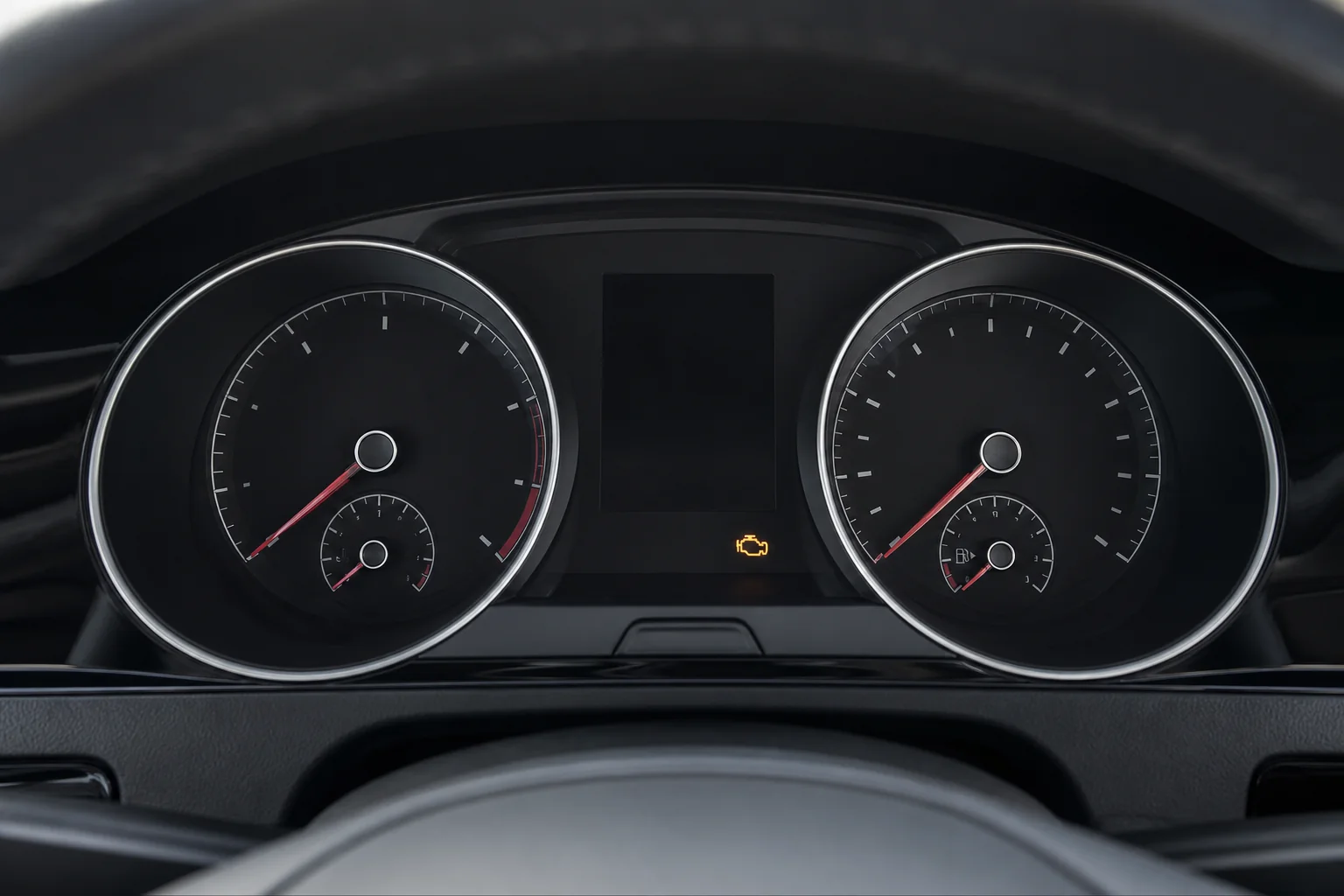
Limp mode is a deliberate torque-limitation strategy — the ECU detects a reading it cannot trust or a value out of safe range, and caps power to protect the engine, turbo or gearbox. Common triggers: boost pressure deviation, DPF problems, EGR faults and failing sensors. At the roadside: stop safely, do not push through it, and know that a restart may clear it temporarily — the fault is still logged. Get the codes read (diagnostics from £40 at FLR) and fix the cause. Never remap over an active fault; a healthy car is the entry requirement for any tune, not the result of one.
What Limp Mode Actually Is
Modern engines run on trust. The ECU commands boost, fuelling and timing based on what dozens of sensors report — and it constantly cross-checks those reports against what it expects to see. When a value goes out of range or two sensors disagree, the ECU stops trusting its own picture of the engine. Its response is a torque limitation strategy: cap the torque request, often limit revs, sometimes lock the gearbox in one gear, and get the car home without letting an unverified fault do expensive damage.
That is all "limp mode" (properly, limp-home mode) is. Not a breakdown — a controlled retreat. The frustrating flat throttle on the A56 is the ECU deliberately refusing to load a system it cannot verify, because the alternative might be a melted turbo or a destroyed piston.
It helps to think of it as the opposite of a warning light. A light says "something is wrong, keep an eye on it". Limp mode says "something is wrong enough that I am no longer willing to make full power until a human investigates".
What Limp Mode Feels Like
- Sudden loss of power — the classic symptom, often mid-acceleration; the turbo simply stops participating
- Rev limit capped — commonly somewhere around 2,500–3,000rpm, so motorway speed is just about holdable but overtaking is gone
- Gearbox held in a single gear — on automatics, third gear is a common refuge
- Warning lights — engine management, glow plug flash on diesels, or an EML that arrives with the power cut; occasionally no light at all
- Normal again after a restart — sometimes; more on why that is a trap below
The Common Triggers
Years of fault-finding work at the Haslingden workshop says the same culprits appear again and again:
| Trigger | What is happening | Typical culprits |
|---|---|---|
| Boost deviation | Actual boost pressure does not match what the ECU requested — over or under | Split boost hoses, stuck turbo actuator or vanes, faulty boost sensor, leaking intercooler |
| DPF problems | Filter loaded beyond regeneration limits, or pressure sensor readings implausible | Short-trip driving, failed regens, tired pressure sensor — see our DPF facts guide |
| EGR faults | Valve stuck open or closed, or flow does not match the commanded position | Carbon build-up, failed valve motor, vacuum faults |
| Sensor failures | MAF, MAP, crank, cam or temperature sensors reporting implausible values | Age, contamination, wiring chafe, water ingress |
| Fuelling faults | Rail pressure cannot reach or hold target | Weak lift pump, tired injectors, pressure regulator faults |
| Gearbox protection | TCU detects overheating or implausible behaviour and limits torque itself | Low fluid, worn clutch packs, TCU sensor faults |
Notice the pattern: almost every trigger is either a part that wears (hoses, sensors, valves) or a system fighting its usage pattern (DPFs on short trips). Limp mode is rarely random — it is usually the loudest symptom of something that has been developing quietly for weeks. Our guide to signs your car needs a remap covers how to tell map limitations from mechanical symptoms — limp mode is always the latter.
At the Roadside — What to Do Right Now
- Do not panic and do not push through it. The car will still drive, just slowly. Flooring the pedal achieves nothing — the torque cap is absolute.
- Get somewhere safe. If you are on the M66 or M65, use the reduced power you have to reach the next junction or services rather than stopping in a live lane. Limp mode is designed to get you off the motorway.
- Stop, switch off, wait a minute. A restart clears some limp events — if the fault was transient (a momentary overboost spike, for example), the car may drive normally again.
- Understand what a successful restart means. The fault code is still logged and the underlying cause is still there. You have reset the symptom, not fixed the problem. If it happened once, it will happen again — usually at a worse moment.
- Get the codes read soon. Not eventually — soon. The stored freeze-frame data (what every sensor saw at the moment of the fault) is gold for diagnosis, and repeated limp events can mask secondary damage building up.
- If it will not clear and the car is barely driveable — temperature warnings, loud noises, heavy smoke — stop and recover it. Limp mode protects against calibration-level risks, not mechanical carnage in progress.
Why a Restart Sometimes "Fixes" It
Worth its own section because it fools so many people. Many limp strategies are latched per drive cycle: the ECU sees a fault, protects itself, and holds the limitation until the ignition cycles. On restart, it re-runs its checks; if the fault is not currently present — a boost spike that passed, a sensor that misread once — full power returns.
That does not mean the car healed. It means the fault is intermittent, which is actually worse news for diagnosis and exactly why the stored codes matter. A car that limps every Tuesday on the same hill out of Rossendale is telling you something specific: load-related, temperature-related, repeatable. Bring us that pattern along with the codes and the diagnosis gets much faster.
Diagnosing It Properly
A proper limp mode diagnosis is more than reading a code and replacing whatever part the code names. The code tells you which check failed — not why. A boost deviation code can be a £15 hose or a £900 turbo, and swapping parts on guesswork gets expensive fast. The process that actually works:
- Read all modules — engine, gearbox, emissions — with freeze-frame data, not just the headline code
- Live data under load — watching requested vs actual boost, rail pressure and sensor plausibility while driving, because most limp triggers only appear under load
- Physical inspection — hoses, actuator movement, connectors — guided by what the data points at
- Fix, clear, re-test — and verify the fault stays gone under the same conditions that triggered it
That is precisely what our diagnostics service — from £40 standalone — does. You get the findings explained in plain English and an honest recommendation, even when the recommendation is "this is a warranty job, take it to the dealer".
Why You Must Never Remap Over Limp Mode
Here is the advice that appears under every limp mode forum thread: "mate, just get it mapped out." Let us be unambiguous about why that is dangerous.
Limp mode is a protection triggered by a fault. Software can indeed be written to raise thresholds or ignore the offending signal — and doing so does not repair the split hose, the dying sensor or the loaded DPF. It removes the guard rail while the hazard is still there. The overboost that triggered protection now runs unprotected. The DPF that could not regenerate keeps loading until it fails outright. You have paid money to convert a warning into a repair bill.
There is also a legal dimension: where the "fix" involves deleting the DPF, EGR or AdBlue system that keeps triggering faults, that is illegal for UK road use — full stop. No MOT-passing, road-driven vehicle should have its emissions systems removed or defeated, and any tuner offering it for a road car is telling you everything about their standards.
Our position is simple and non-negotiable: no FLR remap touches a car with active faults. Diagnose first, repair, verify — then tune, if you still want to. A remap is a reward for a healthy engine, not a painkiller for a sick one. If you are weighing up tuning a car with a history of limp events, read limp mode codes before a remap — it covers exactly which codes must be resolved before any file goes near your ECU.
Common Misconceptions
- "Limp mode means my engine is dying." Usually the opposite — the protection fired early enough to prevent damage. Many triggers are £20–£100 fixes.
- "Disconnecting the battery fixes it." Same trap as the restart: you cleared the symptom and possibly wiped useful diagnostic data. The cause remains.
- "A remap caused my limp mode." A bad generic map genuinely can — over-ambitious boost targets trip deviation limits. A properly written custom file, verified with live data, should not. Choose your tuner accordingly.
- "It only does it sometimes, so it's fine." Intermittent is not fine; intermittent is early. The failure that ends by-the-roadside starts as once-a-fortnight.
Keeping It From Coming Back
Most limp mode visits we see were preventable: boost hoses inspected at service time, DPF-equipped diesels given a proper motorway run regularly instead of a diet of two-mile trips, EGR and intake carbon addressed before the valve sticks, and sensors replaced when they start drifting rather than when they fail. If your driving is genuinely all short trips, a diesel with a DPF may simply be the wrong tool — an honest conversation no salesperson had with you, but one worth having now.
Next Steps
If your car is in limp mode now, or has been recently, the path is short: get the codes read, get the cause fixed, get it verified. Book a diagnostic session from £40 at the workshop in Haslingden — easy to reach off the A56 and Grane Road — or ask about mobile coverage across Lancashire. Send your details through the contact page or call 01706 404 357, and browse the Knowledge Centre for more plain-English answers. And once the car has a clean bill of health, if you fancy claiming back some of the performance the factory left on the table — that is a conversation we are always happy to have.
Limp Mode — Common Questions
Limp mode is a deliberate protection strategy: when the ECU detects a sensor reading it cannot trust or a value outside safe limits, it caps torque, often limits revs and sometimes holds the gearbox in one gear. The goal is to get you home without letting an unverified fault cause expensive damage.
Boost pressure deviation (split hoses, stuck turbo actuators, faulty sensors), DPF loading or sensor problems, EGR valve faults and failing engine sensors. Gearbox protection can also limit torque independently. The stored fault codes identify which check failed.
Stop somewhere safe, switch off and restart — many limp events are latched per drive cycle and will clear if the fault is not currently present. But the code is still logged and the cause is still there. Get the codes read and the underlying fault fixed; that is the only real exit.
For a short, careful journey to safety or a workshop — generally yes; that is what the mode is designed for. It is not safe to ignore for weeks, and if you have temperature warnings, unusual noises or heavy smoke, stop and recover the vehicle instead.
No — and anyone offering to "map out" an active fault should be avoided. Software that raises thresholds or ignores a faulty signal removes the protection while leaving the fault in place. Diagnose and repair the cause first; remap only a verified healthy car.
Yes. Generic files with over-ambitious boost targets routinely trip boost deviation limits, especially on cars with ageing hoses or tired actuators. A custom-written file verified with live data logging is how professional tuners avoid exactly this.
At Finish Line Remaps, standalone diagnostics starts from £40 — full code read across all modules, live data where needed, and findings explained in plain English with an honest repair recommendation. The repair cost depends entirely on the cause, from a £15 hose upwards.
Intermittent limp mode usually means a marginal component — a hose that leaks under full boost only, a sensor that drifts when hot, a DPF near its limit. The pattern (same hill, same weather, same load) is valuable diagnostic information, so note it down and mention it when you book.