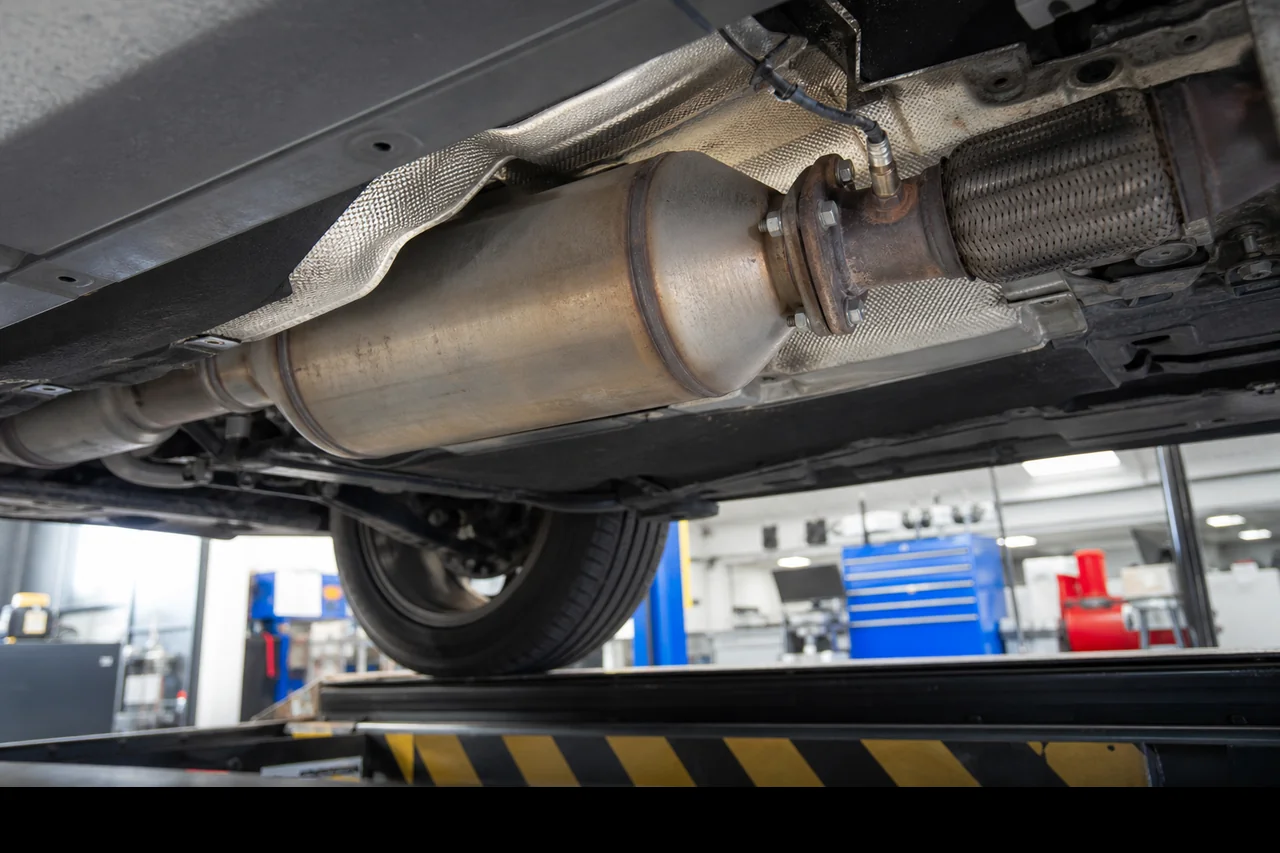
A road-legal ECU remap keeps your DPF fitted and working — it adjusts fuelling, boost and torque targets within factory emissions monitoring. A DPF delete removes or bypasses hardware and alters software to hide it — illegal for UK road use and an MOT fail. Remapping does not magically fix a blocked or cracked DPF; diagnostics first. FLR tunes road diesels from £150 with emissions equipment intact. For off-road-only motorsport context, see our separate DPF solutions page — we do not advise deleting DPFs on road-going vehicles.
The Short Answer
Does remapping affect your DPF? Yes — indirectly. A properly written road remap changes how the engine produces soot and how aggressively the ECU manages regeneration. It does not remove the filter, disable monitoring or make a failing DPF disappear from diagnostics.
Will remapping fix DPF problems? No. If your filter is overloaded, cracked or your differential pressure sensor is faulty, you need diagnosis and legal repair — forced regeneration support, cleaning where appropriate, or component replacement. Adding power to a car already struggling with emissions makes things worse, not better.
Is remapping the same as a DPF delete? Absolutely not. That confusion costs drivers money and MOT passes every week in Lancashire. Remapping rewrites calibration. Deleting removes hardware and falsifies the ECU's view of the exhaust system. We explain both clearly below because honest advice beats a £200 forum "solution" that fails at the next MOT test.
At Finish Line Remaps in Haslingden, we diagnostics first on every diesel — from £40 standalone or included on standard remap bookings. We write road-focused Stage 1 calibrations from £150 with DPF, EGR and AdBlue strategies left intact on UK road vehicles. See our Stage 1 remap guide for how that differs from illegal delete software.
What a DPF Actually Does
The diesel particulate filter traps soot from combustion so it does not exit the tailpipe as visible black smoke. Periodically the ECU initiates regeneration — raising exhaust temperature to burn accumulated soot into ash. Passive regeneration happens on longer runs at steady load; active regeneration injects extra fuel post-combustion to heat the DPF when soot load rises.
Modern common-rail diesels — VAG 2.0 TDI, BMW N47, Ford EcoBlue, Mercedes OM651, PSA BlueHDi — all depend on coherent communication between injectors, EGR, turbo, lambda sensors and the DPF pressure sensors. The ECU constantly models soot loading. When the model and reality diverge — because of sensor faults, short journeys, oil contamination or injector overfuelling — you get warning lights, limp mode and failed regeneration cycles.
None of that is caused by a responsible Stage 1 remap on a healthy car. Much of it is caused by driving patterns: stop-start Lancashire commutes, repeated cold starts, towing without sufficient load and speed to complete regeneration. Understanding the system helps you decide whether you need tuning, diagnostics or both — in that order.
Remap vs Delete — The Critical Distinction
This is the section to read before typing your reg into any online quote form. Forum shorthand blurs "DPF remap" into one phrase covering two completely different — and legally opposite — outcomes.
What a road-legal remap does
A road-focused ECU remap modifies fuelling maps, boost targets, torque limiters and driver-request interpretation inside the factory software structure. Emissions monitoring remains active. The DPF stays fitted. Regeneration logic still runs. The ECU still reads differential pressure across the filter and still sets fault codes if soot load exceeds safe thresholds or sensors report implausible values.
Well-written calibrations can reduce unnecessary soot production by improving combustion efficiency and removing flat spots that cause drivers to over-rev in the wrong gear. Economy remaps from £150 at FLR specifically target smoother torque delivery at lower RPM — useful for drivers who want less soot per mile without chasing peak power figures.
What a DPF delete does (and why we will not do it on road cars)
A DPF delete physically removes or hollows out the filter — or installs a bypass pipe — and changes ECU software to stop monitoring, stop regeneration and suppress related fault codes. On UK road vehicles this is illegal under construction and use regulations, fails MOT visual and functional checks, and creates insurance and liability exposure if undeclared.
We do not offer illegal DPF deletes for road-going vehicles. Full stop. Some businesses market "off-road only" work; our DPF solutions service page covers motorsport and off-road declared use only — not a loophole for daily drivers in Rossendale or Manchester.
Why the confusion persists
Cheap tuners and online file sellers bundle "EGR off, DPF off" into generic downloads without explaining UK law. Social media shows cars with no filter and huge smoke clouds labelled "remapped." That is deletion, not remapping. A customer arrives at our unit asking for a "DPF remap" meaning they want the warning light gone after deleting elsewhere — we decline road-illegal work and offer proper diagnosis instead.
How Remapping Interacts With DPF Operation
Responsible tuning works with emissions hardware, not against it. When we write a Stage 1 map for a road diesel, we adjust parameters the factory also adjusts across markets — European vs fleet calibrations differ from factory to factory — while keeping smoke maps, torque monitoring and regeneration enable conditions coherent.
Specific interactions worth understanding:
- Soot production: Crude fuelling increases particulates; refined fuelling at optimal air-fuel ratios can reduce unnecessary soot during normal driving — though any power increase under full load still produces more particulates than stock at full load
- Regeneration triggers: The ECU still initiates active regen when modeled soot load requires it. Aggressive maps that encourage constant high-load driving may trigger regen more often — not inherently a problem if regen completes
- Rail pressure and injectors: Poorly written maps spike rail pressure, causing overfuelling and black smoke — visible on MOT smoke test and harmful to DPF loading. Custom-written maps avoid that behaviour
- EGR interaction: Sticky or faulty EGR increases soot sent to the DPF. We flag EGR issues during diagnostics; remapping does not clean a sooted EGR valve
- Temperature management: Regeneration needs exhaust heat. Maps that never allow sustained load can contribute to incomplete regen on cars already prone to short-trip soot loading — driving habit matters
Customers sometimes ask whether remapping "turns off" regeneration. On a legal road map, no. If someone offers to "turn off DPF regen" on your daily driver, they are offering illegal deletion software — walk away.
Common DPF Faults — Mechanical, Not Software
Most DPF nightmares are mechanical or sensor problems mislabelled as "needs a remap." Before spending money on calibration, understand what actually fails.
Blocked or overloaded filter
Soot accumulates faster than regeneration clears it — common on cars used mainly for urban miles across Burnley, Bury or central Manchester. Symptoms include reduced power, increased fuel consumption, frequent regen attempts and eventually limp mode. Legal fixes include successful forced regeneration, professional cleaning where the filter structure is intact, or OE-quality replacement — not software deletion.
Failed differential pressure sensors
The ECU compares pressure before and after the DPF to estimate soot load. Sensor drift, wiring faults or moisture cause false readings — the ECU thinks the filter is blocked when it is not, or vice versa. Diagnostics reads live values against expected models; replacing faulty sensors resolves many "mystery" DPF lights without touching the map.
Cracked or melted DPF core
Failed regen cycles, oil contamination from worn turbo seals or excessive passive regeneration attempts can damage the filter substrate. No remap repairs physical damage. Continued driving with a compromised DPF risks turbo and engine damage from excessive back-pressure.
Underlying engine faults
Worn injectors dribbling fuel, leaking turbo oil seals, coolant ingress and faulty MAF sensors all increase particulate output. The DPF is the symptom; the engine fault is the cause. We identify these during pre-remap health checks and refuse to add power until critical issues are addressed — protecting you and the car.
Myth vs Fact — DPF and Remapping
Social media and forum posts spread dangerous half-truths. Here is what we hear in Haslingden — and what is actually true for UK road drivers.
MOT, Road Legality and Insurance
UK road law treats emissions systems as part of type-approved construction. Removing or disabling the DPF on a vehicle that had one fitted is not a grey area for daily drivers — it is non-compliant. MOT failure is the visible consequence; potential fixed penalties and insurance invalidation are the less visible ones.
A road-legal remap on intact emissions hardware is a performance modification for insurance purposes — declare it like any other tune. A DPF delete is also a modification, plus an illegal emissions alteration for road use. Non-disclosure on either risks voided cover.
Our approach aligns with what MOT stations actually test: smoke, equipment presence, warning lights. We do not write maps intended to produce visible smoke on acceleration. We do not disable monitoring on road cars. If you need power for track or off-road declared vehicles only, that conversation belongs on our DPF solutions page — separate from Stage 1 road tuning.
When Remapping Helps — And When It Does Not
Remapping helps when your diesel is mechanically sound, emissions hardware is functional, and you want better drivability, towing torque or economy without touching the filter. Stage 1 from £150, economy calibration from £150, ECU + DSG bundle £275 — all written with road compliance in mind.
Remapping does not help when:
- The DPF warning light is currently on
- Forced regeneration has failed repeatedly
- Diagnostic soot load readings are at maximum
- Pressure sensors read out of range with a known-good filter
- You primarily drive 2-mile trips and refuse the occasional longer run diesels need
- Someone already deleted the filter and you want the light off without refitting hardware
In those cases we sell diagnostics and legal repair paths — not delete files. Sometimes the honest answer is fix the car, adjust driving habits, and revisit tuning later. That answer saves more money than a £50 illegal download.
Driving Habits That Protect Your DPF
Whether stock or remapped, diesel DPF health depends partly on you. Lancashire geography includes hills that load engines — good for heat — and urban crawls that prevent regen completing.
Practical habits:
- Occasionally drive 20–30 minutes at steady motorway or A-road speed to allow passive regeneration
- Avoid interrupting active regeneration — if the dash shows regen in progress, finish the cycle when safe
- Fix oil consumption issues promptly — oil ash poisons DPF substrates permanently
- Use correct low-ash engine oil specification for your engine
- Do not ignore EML — early diagnostics from £40 beats emergency recovery on the M66
A remapped diesel with healthy habits often runs cleaner in real-world driving than an unmapped diesel driven exclusively on cold short hops — because smoother torque reduces the urge to rev through inefficient ranges.
FLR's Approach — Facts Over Forum Fiction
DPF and remapping belong in the same conversation only when the facts are separated. Remapping is calibration improvement on compliant hardware. Deletion is illegal tampering for UK road cars — we will not perform it or recommend it for daily use.
We diagnostics first, tune second, and tell you plainly when tuning is not the answer. Stage 1 £150, economy £150, ECU + DSG bundle £275, standalone diagnostics £40. Road-focused files, original backup saved, reversible on request.
DPF fault? Start with diagnostics. MOT questions? Read remap and MOT. Off-road declared motorsport context only? See DPF solutions. Call 01706 404 357 or request a quote with your VRN — we will tell you what your car actually needs.
DPF and Remapping — Common Questions
No — a legal road ECU remap keeps the DPF fitted and emissions monitoring active. It adjusts fuelling, boost and torque calibration. Software that disables DPF monitoring is a delete, not a remap, and is illegal for UK road vehicles.
No. A DPF warning indicates a logged fault — overloaded filter, failed regeneration, sensor issue or underlying engine problem. You need diagnostics and legal repair first. Remapping without fixing the cause does not resolve legitimate faults.
We will not remap until the fault is diagnosed and resolved on road cars. Adding power to a car with active emissions faults risks further damage and MOT failure. Book diagnostics from £40 first.
A properly written road calibration on a healthy car with intact emissions equipment should not cause MOT failure by itself. Failures linked to tuning usually involve smoke, deleted hardware or pre-existing faults. See our remap and MOT guide.
No. Stage 1 remapping improves performance within factory emissions architecture. DPF delete removes hardware and falsifies monitoring — a separate illegal modification for UK road use. Reputable tuners do not conflate the two.
On a healthy car, smoother economy-focused calibration may reduce unnecessary soot from poor low-RPM driving habits — but it cannot fix a blocked filter or faulty sensor. Mechanical health and driving patterns matter more than software alone.
No. We do not perform illegal DPF deletes on UK road-going vehicles. We offer diagnostics, legal repair support and road-focused remapping with emissions hardware intact. Off-road declared motorsport work is described separately on our DPF solutions page.
Book diagnostics to confirm no active DPF faults, soot load is acceptable and sensors read correctly. Fix any emissions issues first. Then Stage 1 from £150 or economy remap from £150 on a healthy car — with factory file backup saved at FLR.