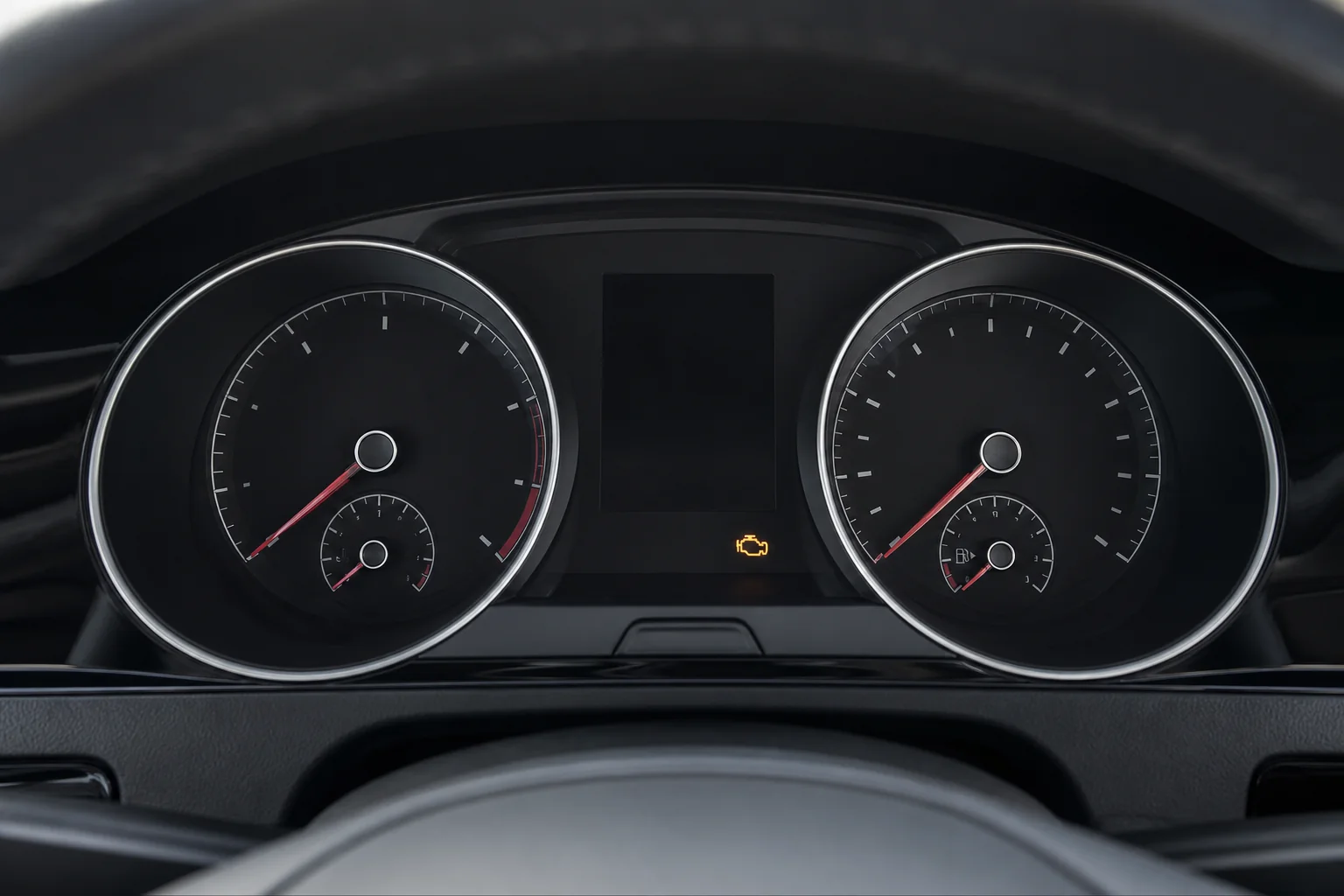
The MAF sensor measures how much air enters the engine; the MAP sensor measures pressure in the intake manifold. Either one drifting or contaminating causes flat spots, hesitation, poor MPG and lean codes like P0171. MAF contamination can sometimes be fixed with a proper clean using dedicated MAF cleaner — never carb cleaner — but a genuinely failed sensor needs replacing. Over-oiled aftermarket air filters are a classic MAF killer. We verify both sensors with live data before every remap, because tuning on top of bad airflow readings bakes the fault into the file. Diagnostics from £40.
The Short Answer
Flat spots and hesitation are usually a fuelling mismatch: the ECU thinks the engine is getting one amount of air and fuels for it, but the real amount is different. The two sensors responsible for the air side of that sum are the MAF (mass air flow) and MAP (manifold absolute pressure) sensors. When either reads wrong — through contamination, drift or outright failure — the mixture goes wrong with it, and you feel it as hesitation, lost power and worse economy.
The fix is rarely expensive. Sometimes it is a careful clean. Sometimes it is a replacement sensor. Occasionally the sensor is innocent and the real problem is a split intake hose feeding it bad data. The trick is knowing which — and that is a live-data job, not a guess. This guide applies to petrol and diesel alike; if your car drives fine and you are just researching before a remap, the pre-remap section near the end is the part written for you.
What MAF and MAP Sensors Actually Measure
The MAF sensor sits in the intake pipe after the air filter. Inside is a heated element; incoming air cools it, and the current needed to keep it at temperature tells the ECU exactly how much air mass is flowing in. Mass matters — cold dense Pennine morning air carries more oxygen than warm afternoon air at the same volume, and the MAF captures that automatically.
The MAP sensor lives on or near the intake manifold and measures absolute pressure inside it. On turbocharged cars that includes boost pressure — which is why MAP readings are central to how the ECU manages the turbo. From pressure, intake temperature and engine speed, the ECU calculates airflow a second way.
Many cars run both, cross-checking one against the other; some rely mainly on one. Either way, these readings feed directly into fuelling and boost decisions dozens of times per second. They are, without exaggeration, the foundation the entire calibration stands on — including any remap.
Symptoms of a Failing MAF
- Flat spots and hesitation — especially under steady acceleration, where a contaminated element under-reads and the engine runs lean
- Poor MPG — mis-metered air means mis-metered fuel, in either direction
- Lean codes — P0171 (system too lean) is the classic; P0101 (MAF range/performance) points at the sensor directly
- Rough or hunting idle — airflow at idle is tiny, so small errors are proportionally huge
- Runs better unplugged — the old workshop tell: unplug the MAF and the ECU falls back to estimated values. If the car improves, the sensor was feeding it worse data than a guess
MAF faults tend to creep. Contamination builds over months, so the car gets gradually lazier and owners adjust without noticing — until they drive a healthy example and realise what has gone missing.
Symptoms of a Failing MAP
- Hesitation and surging under load — pressure readings drive boost and fuelling decisions, so errors show most when working hard
- Boost-related faults — on turbo cars a lying MAP can trigger underboost or overboost codes like P0299 or P0234, and with them limp mode (see the codes that cause limp mode before a remap)
- Hard or lumpy cold starts — start-up fuelling leans on the MAP reading
- Black smoke on diesels — over-reported pressure means over-delivered fuel
- P0106 / P0107 / P0108 — MAP range, low-signal and high-signal codes respectively
MAP sensors also suffer a secondary failure mode on diesels: the sensor is fine but its port cokes up with soot and oil vapour from the EGR system, so it reads a muffled version of reality. The fix there is cleaning the port, not replacing the part.
Contamination vs Genuine Failure
This distinction decides whether you spend £10 or £150, so it is worth getting right. Contamination means the sensing element is coated — dust that got past the filter, oil vapour from crankcase breathers, or filter oil (more on that below). The element underneath still works; it just cannot read properly through the coating. Genuine failure means the element or its electronics have degraded — drift, dead spots in the response range, or no signal at all. No amount of cleaning fixes that.
Live data separates them quickly. We compare the MAF's reading at idle and under load against what a healthy engine of that spec should flow, and we watch how the signal responds — a contaminated sensor typically under-reads smoothly, while a failing one gets noisy or flat-lines in parts of its range. That check is part of every fault-finding session and every pre-remap scan.
Cleaning — The Honest Version
Yes, MAF cleaning sometimes genuinely works — we will not pretend otherwise to sell you a sensor. If the fault is contamination and the element is intact, a careful clean restores the reading and the flat spot disappears. But do it properly:
- Use dedicated MAF cleaner only. Carb cleaner and brake cleaner attack the element and its coatings — they turn a contaminated sensor into a dead one
- Never touch the element. The wire or film is fragile; spray from a distance and let it work
- Let it dry completely before refitting — solvent on a heated element at start-up is a great way to kill it
- Manage expectations. If readings do not recover after a proper clean, the sensor has drifted or failed and replacement is the honest answer
MAP sensors are less about the element and more about the port — clearing carbon from the sensing passage is often the whole job on a sooty diesel.
The Aftermarket Filter Oil Warning
A pattern we see often enough to give it its own section: oiled cotton-gauze aftermarket air filters. The filters themselves are fine when serviced correctly — the problem is over-oiling. Excess oil migrates off the filter, through the intake, and coats the MAF element sitting directly downstream. The result is a classic contaminated-MAF flat spot on a car whose owner just spent money trying to make it faster.
If you run an oiled filter: oil it sparingly, exactly to the manufacturer's instructions, and expect to clean the MAF if you ever get it wrong. If you are planning intake upgrades alongside tuning, mention it when you book — it changes what we check.
What Fixing It Costs
MAF cleaner is around £10 and twenty careful minutes. Replacement MAF sensors typically run £50–£200 for quality units on mainstream cars; MAP sensors are usually cheaper, often £30–£100, and both are generally quick to fit. Two pieces of honest advice: buy OEM or reputable brands, because cheap unbranded MAF sensors are notorious for reading wrong out of the box — and diagnose before buying anything, because a split intake boot causes identical symptoms for the price of a hose clip. Diagnostics from £40 settles it before you spend.
Why This Matters Before a Remap
A remap is a set of instructions written against what the ECU believes about airflow. Write a custom file on top of a MAF under-reading by ten per cent and the error is baked in — the car fuels wrong at exactly the loads where the map works hardest. This is why our process is diagnostics first on every booking: codes read, MAF and MAP live data sanity-checked, faults fixed before the custom file is written and your factory backup archived. It is also why a remap will not fix a flat spot caused by a bad sensor — if your symptoms match this guide, the sensor is the job, and the remap is the reward afterwards. Unsure which side of that line you are on? Signs your car needs a remap walks through it.
When NOT to Act
- Do not replace sensors off symptoms alone. Vacuum leaks, split boost hoses and clogged filters mimic both sensors perfectly
- Do not clean a MAF with the wrong solvent — you will convert a maybe into a definitely
- Do not stack unknowns. New filter, new sensor and a remap on the same day makes any later fault impossible to trace — verify each change
- Do not ignore a lean code because the car "feels fine". Lean running under load builds heat you cannot feel from the seat until something expensive lets go
Next Steps
If you have a flat spot, hesitation or a lean code, book diagnostics from £40 and we will tell you whether it is the MAF, the MAP, a hose or nothing to worry about — with the live data to show for it. If the sensors check out healthy and the car just feels flat by design, that is where Stage 1 from £150 comes in, diagnostics included. More common questions on our FAQ page, or send your VRN / call 01706 404 357. Haslingden workshop, mobile across Lancashire and the North West via the M65 and M66.
MAF & MAP Sensors — Common Questions
The MAF sensor sits in the intake pipe and directly measures the mass of air entering the engine. The MAP sensor measures absolute pressure inside the intake manifold, which the ECU uses to calculate airflow and manage boost. Many cars use both and cross-check them against each other.
Yes — it is one of the most common causes we see. A contaminated MAF under-reads airflow, the ECU under-fuels to match, and the engine goes flat under acceleration. Lean codes like P0171 often accompany it, and MPG usually suffers too.
If the fault is contamination rather than genuine failure, yes — a careful clean with dedicated MAF cleaner often restores the reading. Never use carb or brake cleaner and never touch the element. If readings do not recover after a proper clean, the sensor needs replacing.
Quality MAF sensors typically cost £50–£200 on mainstream cars; MAP sensors are usually £30–£100. Both are generally quick to fit. Avoid cheap unbranded MAF units — they frequently read wrong from new and recreate the original fault.
An over-oiled cotton-gauze filter can. Excess filter oil migrates onto the MAF element and contaminates it, causing flat spots and lean running. The filters are fine when oiled sparingly to the manufacturer's instructions — the over-oiling is the problem, not the filter itself.
No — a remap written over bad airflow data bakes the error into the calibration. The sensor fault is the job; the remap comes after. That is why we verify MAF and MAP live data as part of the diagnostics included with every remap booking.
Yes, on every booking. Diagnostics comes first: fault codes read, MAF and MAP readings sanity-checked against expected values at idle and under load. If something is off we tell you and fix it before any file is written — your factory backup is archived and everything stays reversible.