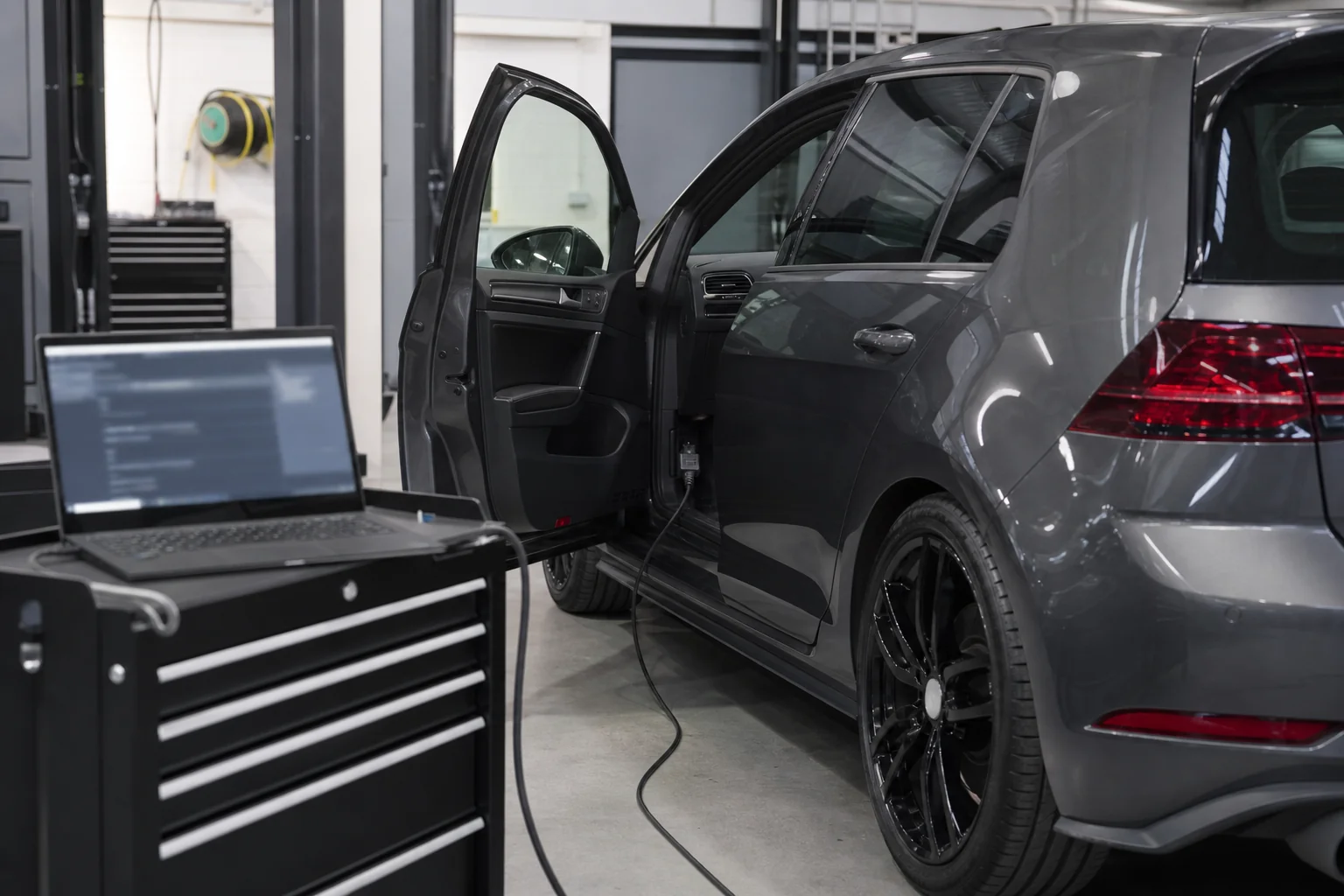
On PCP and HP, the finance company legally owns the car until the final payment, and most agreements restrict modifications — check yours before tuning. Leases almost always prohibit modifications outright. A remap is reversible (we keep your factory file for life), which helps at handback, but returning to stock does not guarantee the modification is undetectable. Whatever the finance says, a remap must always be declared to your insurer. This is practical guidance from a tuning workshop, not legal advice — when in doubt, ask your finance company in writing.
The Short Answer
Can you remap a financed car? Physically, yes — the ECU neither knows nor cares who holds the V5C. Contractually, it depends on your agreement. On PCP and HP the car belongs to the finance company until the agreement ends, and modifying someone else's property without permission is exactly the kind of thing contracts have clauses about. On a lease, the answer is almost always a flat no.
One thing before we go further: we are a tuning workshop in Haslingden, not a law firm. What follows is practical guidance from handling this question with customers week in, week out — it is not legal advice, and your own agreement is the document that actually governs your situation. Read it, or ask your finance company directly.
Who Actually Owns the Car on Finance
This is the fact that reframes everything. On PCP (Personal Contract Purchase) and HP (Hire Purchase), you are not the owner — you are the registered keeper. The finance company owns the vehicle until you make the final payment: the balloon payment on a PCP, or the last instalment plus option-to-purchase fee on HP. Until that moment, the car is their asset and you are using it under the terms of their contract.
That is why modification clauses exist. The finance company's security for the loan is the car itself, and anything that could affect its value, its warranty status or its mechanical risk affects their asset. A remap touches all three, which is why most agreements either require the lender's written consent for modifications or prohibit them until the agreement ends.
Leases (PCH — Personal Contract Hire) are stricter again: you never own the car, you are effectively renting it long-term, and it must go back in factory condition. Lease agreements almost universally prohibit modifications, and a remap discovered at return can mean recalibration costs, penalty charges, or both. Our honest advice on leased cars is short: do not remap them.
What Modification Clauses Typically Say
Wording varies by lender, but financed-car agreements typically include some combination of the following:
- No modifications without written consent — the most common formulation on PCP and HP
- Obligation to maintain the vehicle per manufacturer requirements, which a tune can complicate if warranty work is refused
- Return condition requirements — on PCP, if you hand the car back rather than paying the balloon, it must meet fair wear-and-tear standards, and undisclosed modifications fall outside them
- Insurance obligations — you must keep the car fully insured, and an undeclared remap can invalidate the policy, which itself breaches the finance agreement
Notice how the insurance point loops back on itself: even if your lender never checks the ECU, an invalidated insurance policy puts you in breach of the finance contract too. This is one reason we say on every relevant page of this site — a remap must be declared to your insurer, no exceptions. Our remap insurance guide covers how to do it without drama.
The Honest Risks at Handback and Inspection
Here is where we differ from tuners who wave this topic away. The risk on a financed car is concentrated at specific moments:
- PCP handback. If you return the car instead of paying the balloon, it gets inspected. Inspections focus on bodywork, tyres and mileage — ECU software is not normally checked. But "not normally" is not "never", and if the car has been in for warranty work that flagged the software, the record already exists.
- Warranty claims during the agreement. This is the realistic discovery route. A powertrain warranty claim is when the manufacturer verifies the software — and a refused claim on a financed car leaves you paying for a repair to an asset you do not yet own, possibly while in breach of the maintenance clause. Our remap and warranty guide covers what dealers can and cannot decline.
- Early termination or voluntary termination. The car goes back earlier than planned and gets the same inspection treatment, except now you had less time to return it to stock.
- Lease returns. The strictest inspections of all, against a contract that almost certainly prohibited the modification in the first place.
How dealers and manufacturers actually identify tuned software — including flags that survive a return to stock — is covered honestly in our guide to remap detection and dealer scans. Read it before deciding; the detail matters here more than anywhere.
Reversibility Helps — With One Big Caveat
Every remap we write starts with reading and archiving your factory ECU file, which we keep for life. That means a financed car can be returned to its exact factory calibration before handback, inspection or sale — at any point, for any reason. For PCP owners planning to buy the car at the end (paying the balloon and keeping it), reversibility plus honest insurance declaration covers most practical concerns.
The caveat, stated plainly: returning to stock restores factory behaviour, not necessarily factory history. Some manufacturers record markers on their central systems when modified software is detected, and those records survive a reflash. Flash counters on some ECUs increment with every write. If the tune was never detected while it was on, a return to stock usually leaves nothing to find — but we will not pretend that is a guarantee. The mechanics of going back to standard are covered in can a remap be reversed?
PCP vs HP vs Lease — The Practical Differences
The same remap carries different weight depending on the paperwork behind the car:
- HP: you will own the car at the end, automatically. The modification clause applies during the agreement, but there is no handback inspection waiting for you. Of the three, HP carries the least handback risk — the main exposures are warranty and insurance.
- PCP: depends entirely on your endgame. Keeping the car at the end? Similar position to HP. Handing it back or trading in against the next one? You need the car back to stock and you are carrying the detection caveat above.
- Lease: the car was never going to be yours and the contract almost certainly prohibits modification. We advise against remapping leased vehicles, and we mean it — this is one of the jobs we turn away.
If you are unsure which you have: if there is a balloon payment or "optional final payment" it is PCP; if the payments simply end and the car is yours, HP; if you must hand it back with no option to buy, a lease.
If You Go Ahead — Doing It Properly
For owners on PCP or HP who read their agreement, weigh the risks and decide to proceed, the sensible route looks like this:
- Read your agreement — find the modification clause and understand what it actually requires. Consent in writing beats assumptions.
- Declare to your insurer first. Non-negotiable, whatever the finance position.
- Choose reversible, custom-written tuning. Our Stage 1 remap from £150 includes diagnostics, a custom file for your exact engine code, and your factory backup kept for life. For anything beyond a standard Stage 1 — unusual vehicles, specific requirements — our custom tuning service works the same way: original file archived before anything is written.
- Plan the exit. If handback is likely, book the return to stock before the inspection, not after the letter arrives.
- Keep the car healthy. A financed car with a refused warranty claim is the worst-case scenario — servicing on time and fixing faults promptly matters more, not less, once you have tuned it.
When Not to Remap a Financed Car
We would rather tell you now than after you have paid. Skip the remap if:
- The car is leased — the contract almost certainly prohibits it and the return inspection is the strictest of all
- Your agreement prohibits modifications and you will not seek consent — knowingly breaching a finance contract to gain some mid-range torque is a bad trade
- You depend on the manufacturer warranty to make the finance viable — a refused powertrain claim on a car you are still paying for hurts twice
- You will not declare it to your insurer — invalid insurance on a financed car is a breach of the finance agreement on top of everything else
- Handback is months away — the benefit window is too short for the admin and risk involved
Next Steps
If you have read your agreement and want to talk through your specific situation — PCP endgame, warranty position, reversibility plan — send us your registration or call 01706 404 357 and we will give you the same honest steer we give every customer at the Haslingden workshop, whether they are five minutes up the A56 or the far end of the M65. For quick answers on insurance, warranties and reversal, the Knowledge Centre covers the common questions. And if the honest answer for your car is "wait until the finance ends" — that is the answer we will give you.
Remapping on Finance — Common Questions
Physically yes, contractually it depends. On PCP the finance company owns the car until the balloon payment, and most agreements restrict modifications or require written consent. Read your agreement first — and if you plan to hand the car back at the end, factor in the return-to-stock step and the detection caveat.
The same modification clauses usually apply during the agreement, but HP carries less handback risk because you automatically own the car at the end — there is no return inspection. The main exposures on HP are warranty goodwill and insurance declaration.
We advise against it. Lease agreements almost always prohibit modifications outright, the car must go back in factory condition, and return inspections are the strictest in the industry. A remap discovered at lease return can mean recalibration costs and penalty charges.
Handback inspections focus on bodywork, tyres and mileage rather than ECU software, so routine discovery is uncommon. The realistic route is a warranty claim during the agreement, where the manufacturer verifies the software and the record then exists. Nobody can honestly promise it will never be found.
Yes. We keep your original factory ECU file for life and can return the car to its exact factory calibration before handback. The caveat: if the modified software was detected at a dealer while the tune was on, some manufacturers keep a central record that a reflash does not remove.
Yes — always. A remap is a material modification and must be declared to your insurer regardless of who owns the car. On a financed car, an invalidated insurance policy can also put you in breach of the finance agreement itself, so the declaration matters twice over.
The guaranteed future value on a PCP is fixed in the contract, so a remap does not change the balloon figure. The risk is different: an undisclosed modification found at inspection falls outside fair wear-and-tear standards and can lead to charges. Returning to stock before handback addresses the practical side of this.
No — we are a tuning workshop sharing practical experience, not solicitors. Your finance agreement is the governing document, and if you need a definitive answer about your contract, ask your finance company in writing or seek proper legal advice.