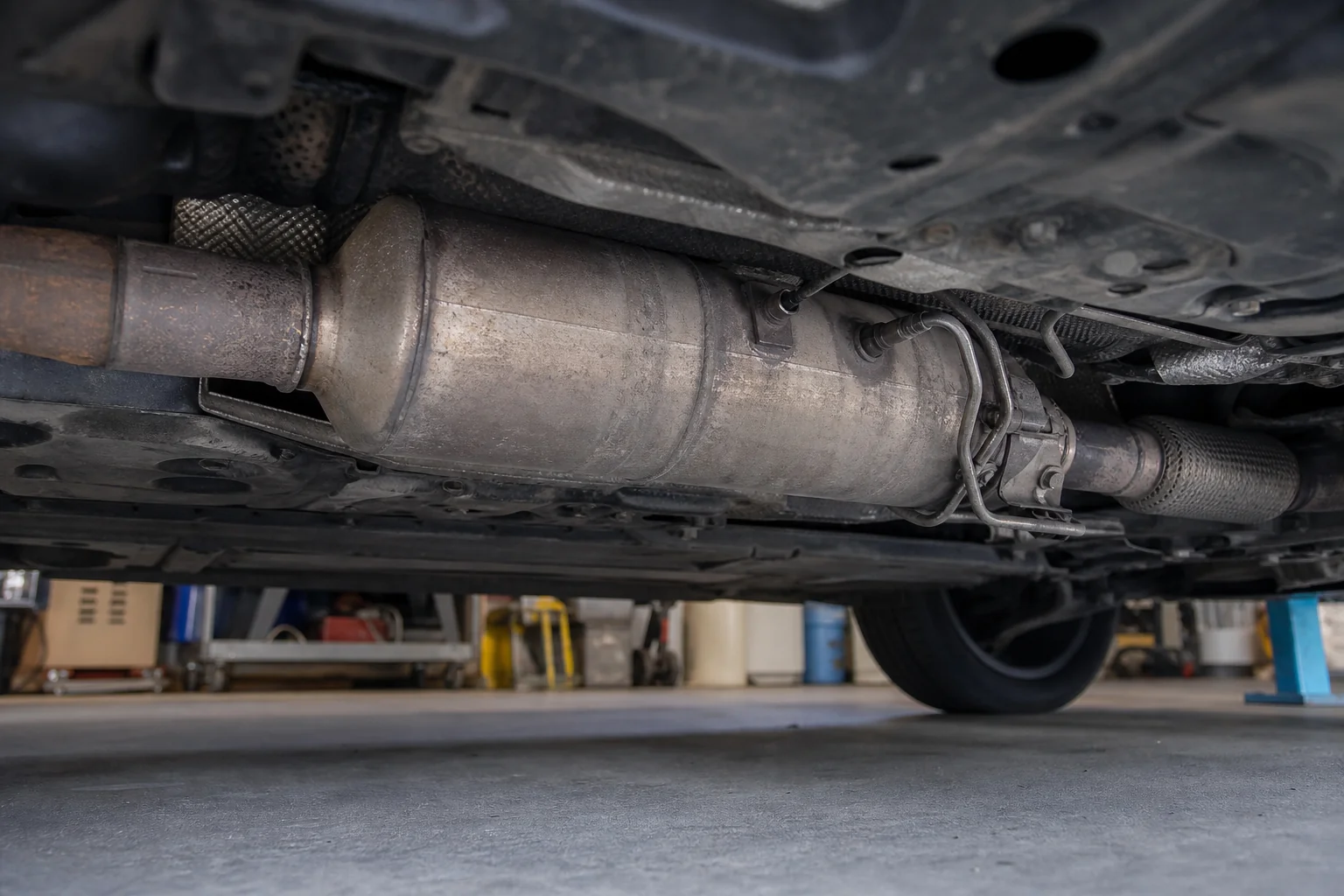
Modern diesels need sustained heat to stay healthy, and short trips never provide it. The result: soot builds in the DPF faster than it can burn off, carbon cakes the EGR system, unburned fuel dilutes the oil, and the battery never fully recharges — all worse in winter. The fix for most owners is one proper sustained run each week — 20–30 minutes at motorway speeds. If your driving is genuinely all short trips, a petrol or hybrid is often the better car. And no remap fixes a clogged DPF — removal is illegal for UK road use, and tuning only helps a diesel that is healthy first.
The Short Answer
Modern diesels are engineered around one assumption: that the engine and exhaust will regularly get properly, thoroughly hot. Every emissions system bolted to a post-2009 diesel — the particulate filter, the EGR circuit, on newer cars the AdBlue system — depends on sustained operating temperature to work as designed. Short trips break that assumption. The engine spends its whole life warming up, the exhaust never reaches regeneration temperature, and problems accumulate quietly for months before the first warning light.
None of this means diesels are bad cars. It means they are the wrong tool for a specific job. A diesel doing forty motorway miles a day will run happily to enormous mileages. The same car doing two miles to school and back will be in a workshop within a couple of years. Same engine, different life.
Who This Applies To
You are in short-trip territory if most of your journeys look like this:
- School runs, nursery drops and town-centre errands under 15–20 minutes
- A commute short enough that the temperature gauge barely reaches the middle
- The car sits for days, then does a five-minute hop
- Stop-start traffic through town rather than open-road driving
Around here that is a familiar pattern — plenty of Rossendale households run a diesel that rarely leaves Haslingden, Rawtenstall or Bacup, with the M65 and M66 sitting unused ten minutes away. That unused motorway, as it turns out, is exactly the medicine the car needs.
Problem 1: The DPF Fills Faster Than It Empties
The diesel particulate filter traps soot from the exhaust and burns it off during regeneration — a process where the ECU raises exhaust temperature high enough to turn the trapped soot to ash. Passive regeneration happens naturally on sustained runs; active regeneration is the ECU forcing the issue by injecting extra fuel to heat the exhaust.
Here is the short-trip trap: active regeneration typically needs the engine warm and the car moving steadily for 10–20 minutes. Turn the engine off mid-regeneration — as short trips force you to, again and again — and the cycle aborts with the soot still in the filter. Each interrupted attempt leaves the DPF slightly fuller. Eventually the filter loads past the point where regeneration is allowed at all, the warning light comes on, and the car needs a forced regeneration at a workshop — or worse, a filter replacement running well into four figures.
Two things every short-trip diesel owner should know. First, the fix at the early-warning stage is usually simple and cheap — a proper assessment and forced regeneration through our DPF solutions service, not a new filter. Second, DPF removal is illegal for UK road use — it is an instant MOT failure and can attract significant fines. Anyone offering a "DPF delete" for a road car is selling you a legal problem. The full picture is in our DPF and remapping facts guide.
Problem 2: EGR Carbon Build-Up
The EGR (exhaust gas recirculation) valve routes a portion of exhaust gas back into the intake to reduce NOx emissions. On a hot, hard-working engine, this is manageable. On a cold engine doing town speeds, the recirculated gas is rich in soot, and it meets oil vapour from the crankcase breather in the intake — forming a sticky carbon paste that coats the EGR valve, the intake manifold and everything in between.
Given enough short trips, the valve starts sticking, airflow chokes, and you get hesitation, rough running, smoke and eventually a warning light with the engine down on power. Like the DPF, this is a usage problem expressing itself as a mechanical one — and like the DPF, EGR delete is not a legal answer for a road car. Cleaning, repair or replacement is.
Problem 3: Oil Dilution
This one is invisible until it is expensive. During active DPF regeneration, extra fuel is injected late in the combustion cycle. Some of that fuel washes past the piston rings into the sump. On a car doing regular sustained runs, regenerations complete efficiently and hot oil evaporates the fuel out. On a short-trip car, regenerations keep starting and aborting — dumping fuel into oil that never gets hot enough to drive it off.
The result is engine oil gradually thinned with diesel: rising on the dipstick, losing its ability to protect bearings, turbo and camshafts. If your diesel's oil level goes up between services, that is not good luck — that is fuel. Short-trip diesels need oil changes more often than the service schedule suggests, not less.
Problem 4: The Battery Never Recovers
Diesels take more cranking effort than petrols, and modern stop-start systems lean on the battery harder still. A five-minute trip takes a big gulp out of the battery at start-up and never runs long enough to put it back. Repeat daily and the battery lives permanently half-charged — which shortens its life, confuses stop-start behaviour, and on some cars triggers a cascade of electrical gremlins that look like faults but are really just a tired battery. Winter turns this from a slow decline into a Tuesday-morning non-start.
Why Winter Makes All of It Worse
Every mechanism above is temperature-driven, and a Lancashire winter attacks each one:
- Longer warm-up — the engine spends even more of each short trip cold, producing more soot and more intake carbon
- Regenerations struggle harder — cold ambient air keeps exhaust temperatures down, so the DPF fills faster and burns off less
- Oil dilution accelerates — cold oil holds fuel; more aborted regenerations mean more fuel to hold
- The battery gives less and takes longer — cold cuts battery capacity just as heaters, lights and heated screens raise the load
If your diesel is going to develop a DPF warning, the odds are it happens between November and February. The owners who come through our doors with filter problems in January almost all tell the same story: town miles, cold weather, and a light that "came out of nowhere". It never came out of nowhere — it had been building since autumn.
The Fix: One Proper Run a Week
The good news is that for most owners the medicine is free and pleasant. Once a week, take the car for a sustained run: 20–30 minutes at motorway or A-road speeds, engine fully warm, keeping the revs moving rather than labouring in a high gear. From our corner of Lancashire, a loop down the M66 and back up the M65, or a run over the A56, does the job perfectly.
What this achieves: the exhaust gets hot enough for regeneration to start and — crucially — finish; hot oil evaporates accumulated fuel; sustained charging tops the battery up properly; and the airflow of a working engine helps keep the intake tract cleaner. One completed regeneration is worth more than a dozen interrupted ones.
Practical additions that help: do not switch off if you notice a regeneration in progress (higher idle, fan running, a slightly different exhaust note — drive a few more minutes instead); keep oil changes on time or early; use quality fuel; and treat the first DPF warning as a prompt to act, not a light to ignore for a month.
When a Diesel Is Simply the Wrong Car
Honesty time, from a workshop that earns money working on diesels: if your driving is genuinely all short trips and there is no weekly run in your routine, the best fix is not a driving habit — it is a different car. A petrol suffers none of the DPF regeneration burden and shrugs off short trips far better. A hybrid is better still for stop-start town work, since the electric side handles exactly the driving that punishes a diesel.
The diesel maths only works when the miles are there. Modern diesels reward high-mileage, sustained-speed drivers with economy and torque — and quietly punish everyone else with emissions-system upkeep. Buying a diesel for a two-mile school run is buying a working dog to live in a flat. If that is where you are, sell it without guilt and buy the right tool.
Where Remapping Fits — And Where It Doesn't
Because we are a tuning workshop, people ask: can a remap fix short-trip problems? The straight answer is no. A remap changes calibration; it cannot empty a soot-loaded filter, clean a carbonised intake or un-dilute your oil. Flashing a tune onto an unhealthy short-trip diesel makes nothing better and several things worse — which is why every FLR job starts with diagnostics, from £40 standalone, and why we decline to tune cars with unresolved DPF or EGR issues.
Where tuning legitimately fits is on a healthy diesel whose usage pattern works. An economy-focused calibration can improve drivability and real-world MPG on a car doing proper miles — the honest expectations are in our economy remap guide. And if your diesel feels flat or hesitant, work out whether that is a tuning opportunity or a symptom first — our guide to the signs your car needs a remap helps you tell the difference. Healthy car first, calibration second. Always that order.
Next Steps
If your diesel already has a DPF light, sluggish running or the smell of fuel in the oil, do not wait for it to escalate — book a DPF assessment or a diagnostic session and find out exactly where the car stands. Caught early, most short-trip damage is recoverable without big bills. For quick answers on regeneration, DPF law and diesel ownership, the Knowledge Centre covers the common questions — or get in touch with your registration and a description of your weekly driving, and we will tell you honestly whether your diesel's life suits it, from our workshop just off Grane Road in Haslingden.
Short-Trip Diesel Ownership — Common Questions
Yes, consistently short journeys are the hardest life a modern diesel can lead. The engine never reaches full temperature, so the DPF cannot regenerate, carbon builds in the EGR and intake, fuel dilutes the oil and the battery never fully recharges. Occasional short trips are fine — a diet of nothing else causes problems.
Once a week is the practical rule: 20–30 minutes at motorway or A-road speeds with the engine fully warm. That gives the DPF a chance to complete a regeneration, evaporates fuel out of the oil and properly recharges the battery.
Typical signs are a slightly raised idle, the cooling fan running after you stop, a change in exhaust note or smell, and temporarily increased fuel consumption. If you notice these while driving, keep going for a few more minutes rather than switching off — an interrupted regeneration leaves soot in the filter.
No. DPF removal is illegal for UK road use — it is an automatic MOT failure and can attract substantial fines. A blocking DPF is a symptom of usage or an underlying fault, both of which can be fixed legally. We assess, force regenerations where appropriate and address root causes instead.
Almost always fuel dilution. Interrupted DPF regenerations wash unburned diesel past the piston rings into the sump, and on a short-trip car the oil never gets hot enough to evaporate it off. Rising oil level means the oil is losing its protective ability — change it early and address the regeneration pattern.
No. A remap changes the engine's calibration — it cannot clean a soot-loaded filter or a carbonised intake. Tuning an unhealthy diesel makes things worse, which is why we run diagnostics before every job and decline to remap cars with unresolved DPF or EGR faults.
Honestly — no. If your driving is mostly town work and journeys under 20 minutes, a petrol or hybrid will serve you better and cost less to keep healthy. Diesels reward sustained miles; they punish short-trip-only use with emissions-system upkeep.
Significantly. Cold weather extends warm-up time, keeps exhaust temperatures lower, accelerates oil dilution and cuts battery capacity — all while short trips get even shorter on heat. Most DPF warning lights we see arrive between November and February on short-trip cars.