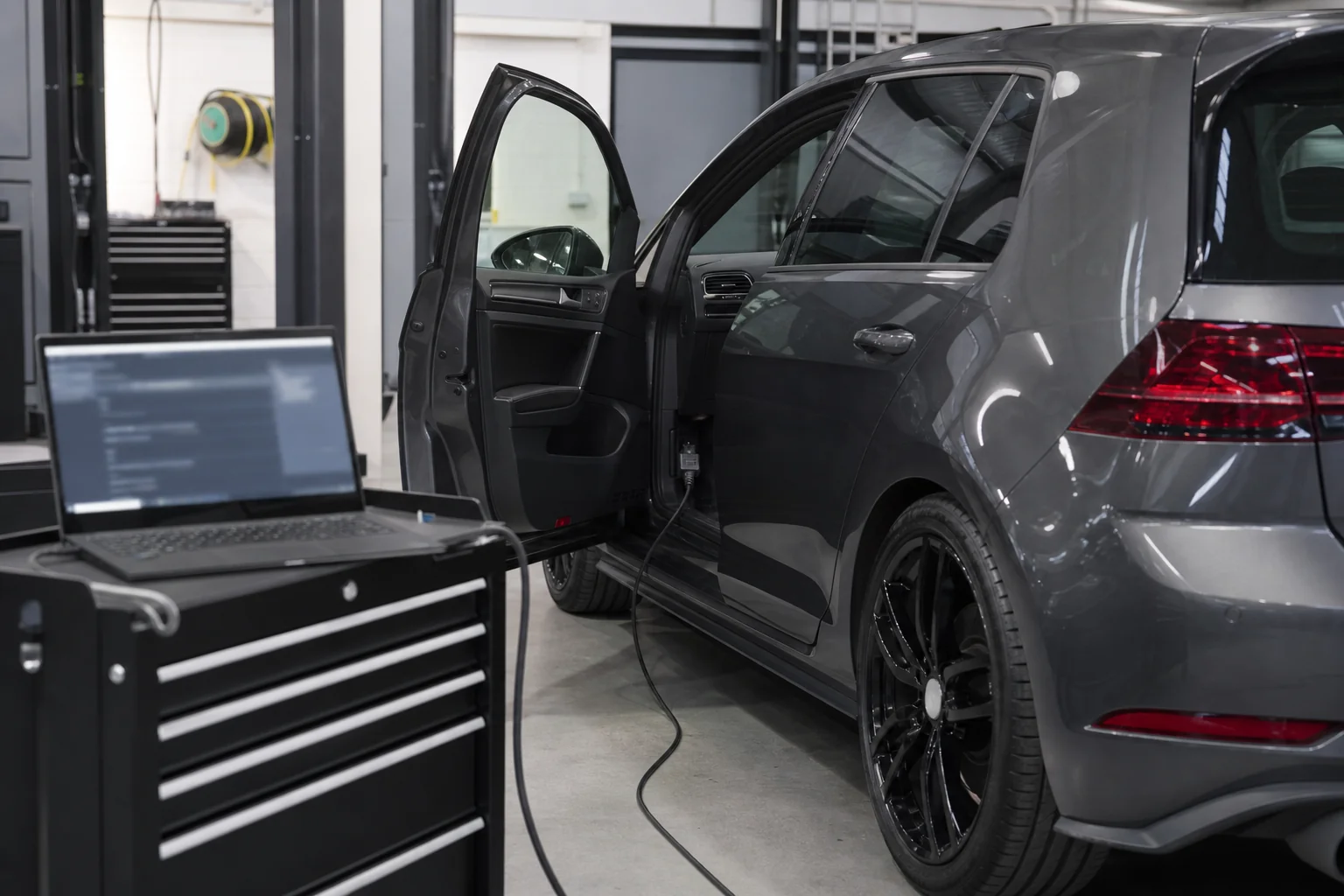
An EcoBoost remap typically adds 25–35 bhp on the 1.0 and 1.5, and ~50 bhp / 80 Nm on the Focus ST's 2.3 — from £150 at FLR with diagnostics included. The deal-breaker is the wet timing belt on the three-cylinder engines: documented, in-spec oil history means a great tuning candidate; unknown history means belt checks first, power later. We check — genuinely — before flashing. Brand overview: Ford remapping guide.
The Short Answer
Should you remap your EcoBoost? A healthy one — absolutely. Ford calibrates these engines conservatively to hit fleet CO2 targets, and the same 1.0 block ships at 100, 125 and 140 bhp outputs. The headroom is real, the response transformation is bigger than the numbers suggest, and the price-to-grin ratio is among the best in tuning. The qualifier — healthy — carries more weight on this engine family than almost any other, and that is the part of this guide that matters most.
At Finish Line Remaps, Stage 1 from £150 includes the diagnostics that decide the question honestly: fault memory, live data, and on the three-cylinder engines, belt and servicing history review.
Typical Stage 1 Gains by Engine
Figures are typical results on a healthy, standard car. We confirm from your VRN before booking:
| Engine / Model | Stock | Typical Stage 1 |
|---|---|---|
| 1.0 EcoBoost 100 (Fiesta, Focus) | 100 bhp / 170 Nm | ~130 bhp / 210 Nm |
| 1.0 EcoBoost 125 (Fiesta, Puma, Focus) | 125 bhp / 170–210 Nm | ~150 bhp / 240 Nm |
| 1.5 EcoBoost 150/182 (Focus, Kuga) | 150–182 bhp / 240 Nm | ~185–210 bhp / 290 Nm |
| 1.5 EcoBoost 200 (Fiesta ST Mk8*) | 200 bhp / 290 Nm | ~235 bhp / 340 Nm |
| 2.3 EcoBoost (Focus ST Mk4) | 280 bhp / 420 Nm | ~330 bhp / 500 Nm |
*Model-specific detail for the STs lives in the dedicated guides: Fiesta ST remap and Focus ST remap.
The Wet Belt — Read This Before Anything Else
The 1.0 EcoBoost and the related 1.5 three-cylinder run their timing belt inside the engine, bathed in oil. The design is quiet and efficient — and completely dependent on the right oil, changed on time. Degraded or incorrect oil attacks the belt; belt debris then circulates and can block the oil pick-up, and the widely documented worst case is engine failure. This is not internet scaremongering; it is the single most important fact in EcoBoost ownership.
The honest framing: it is a servicing-criticality issue, not a universal fault. A car with documented, correct-spec oil changes at sensible intervals is a sound engine and a great tuning candidate. A car with gaps in its history is an unknown — and adding boost to an unknown is how bad reputations are made. So we check: service records, oil condition, belt replacement status against Ford's schedule. If the history is not there, our advice is belt and servicing first, remap second. We would rather lose a booking than tune a time bomb.
What It Actually Feels Like
The factory EcoBoost calibration is pure fleet-economy caution: soft low-end, a brief sweet spot, then an early sigh. Stage 1 fills in the whole curve. A 1.0 Puma stops needing third gear for gaps a mapped one takes in fourth; the 1.5 Kuga stops feeling loaded-breathless; the 2.3 Focus ST becomes legitimately rapid rather than merely quick. Throttle response sharpens everywhere because the torque request maps stop sandbagging — the change owners mention most is not peak power but how much less work the car feels like it is doing.
Known EcoBoost Checks Before We Flash
| Item | Why it matters | How we check |
|---|---|---|
| Wet belt and oil history (1.0 / 1.5 3-cyl) | The defining EcoBoost risk — belt condition is everything | Service records, oil condition, belt replacement status vs schedule |
| Coolant system (1.5 / 1.6 4-cyl era) | Documented coolant-loss history on earlier four-cylinder EcoBoosts — overheating and boost do not mix | Pressure behaviour, coolant level history, visual inspection |
| Turbo and wastegate | Boost stability underwrites every figure above | Boost trace on road test — see turbo health guide |
| Carbon build-up (direct injection) | Higher-mileage GDI engines breathe worse than they should | Live data airflow analysis — see carbon build-up guide |
| Clutch (manual performance models) | Stage 1 torque finds out worn friction material fast | Load test on road, honest recommendation — see clutch health guide |
Who Should NOT Remap Their EcoBoost
- 1.0/1.5 owners with no oil service history — belt first, power later. No exceptions.
- Cars with coolant loss or overheating history that has not been diagnosed — find the cause before adding heat.
- Cars with active boost or misfire codes — diagnose first; that is what diagnostics from £40 is for.
- Anyone unwilling to declare the remap to insurance — non-negotiable.
How We Tune an EcoBoost at FLR
- VRN quote. Registration in, exact engine and software identified, honest expectations and price out.
- Diagnostics first. Fault memory, live data, boost behaviour — and on three-cylinder engines, the belt and servicing review that decides everything. Included with every Stage 1.
- Custom calibration. Factory file read and archived for life, then a file written for your exact engine and fuel — never a generic download. See custom tuning.
- Verification. Post-flash live data, road test, written handover and aftercare advice.
Next Steps
A documented, healthy EcoBoost plus a custom Stage 1 is one of the most grin-per-pound upgrades in tuning — and the servicing discipline that makes it safe is the same discipline that makes the engine last. Related reading: the full Ford remapping guide, the best cars to remap in the UK, and the model guides for the Fiesta ST and Focus ST. Ready? Send your VRN via the contact page or call 01706 404 357. Workshop in Haslingden, mobile across Lancashire and the North West.
EcoBoost Remapping — Common Questions
Typically 25–35 bhp and 40–60 Nm on the 1.0 and 1.5 EcoBoost, and around 50 bhp and 80 Nm on the 2.3 in the Focus ST Mk4 — all on healthy, standard hardware. Percentage-wise the 1.0 is one of the biggest gainers in mainstream tuning. We confirm expectations for your exact engine from the registration.
A healthy, properly serviced one — yes. The non-negotiable is the wet timing belt: it runs in engine oil, and degraded oil or stretched service intervals accelerate belt wear with serious consequences. A documented, in-spec car is a good tuning candidate; an unknown history means belt and servicing checks come before any talk of power.
The 1.0 EcoBoost (and the related 1.5 three-cylinder) run the timing belt inside the engine, lubricated by oil. Old or incorrect oil degrades the belt, and belt debris can block the oil pick-up — widely documented and expensive. It is a servicing-criticality issue, not a universal fault: cars with documented correct-spec oil changes are fine. We verify before tuning.
Stage 1 is from £150 at Finish Line Remaps, including diagnostics, a custom-written file for your exact engine, a permanent factory backup and post-flash verification. Where an automatic gearbox is fitted, gearbox tuning is from £150 and the bundle from £275.
In percentage terms, the 125 bhp 1.0 — typically reaching around 150 bhp, a 20% jump that transforms a Fiesta or Puma. In absolute terms, the 2.3 in the Focus ST Mk4, which typically reaches around 330 bhp and 500 Nm. Both assume a healthy engine verified by diagnostics first.
We calibrate for the fuel you actually buy. On the performance models, 99 RON unlocks the strongest and safest calibration; on the everyday 1.0 and 1.5, a 95 RON map is perfectly good and the gains remain substantial. The map matching the fuel is one reason custom files beat generic downloads.
Yes — the Puma 1.0 (mild hybrid included, case by case) and Kuga 1.5 respond exactly like their Fiesta and Focus siblings: noticeably stronger mid-range and a car that stops feeling breathless when loaded. Same wet-belt servicing caveat on the three-cylinder engines.
Yes. A remap is a material modification in the UK and must be declared. Undeclared tuning can invalidate your policy entirely — a worse outcome than any premium increase.