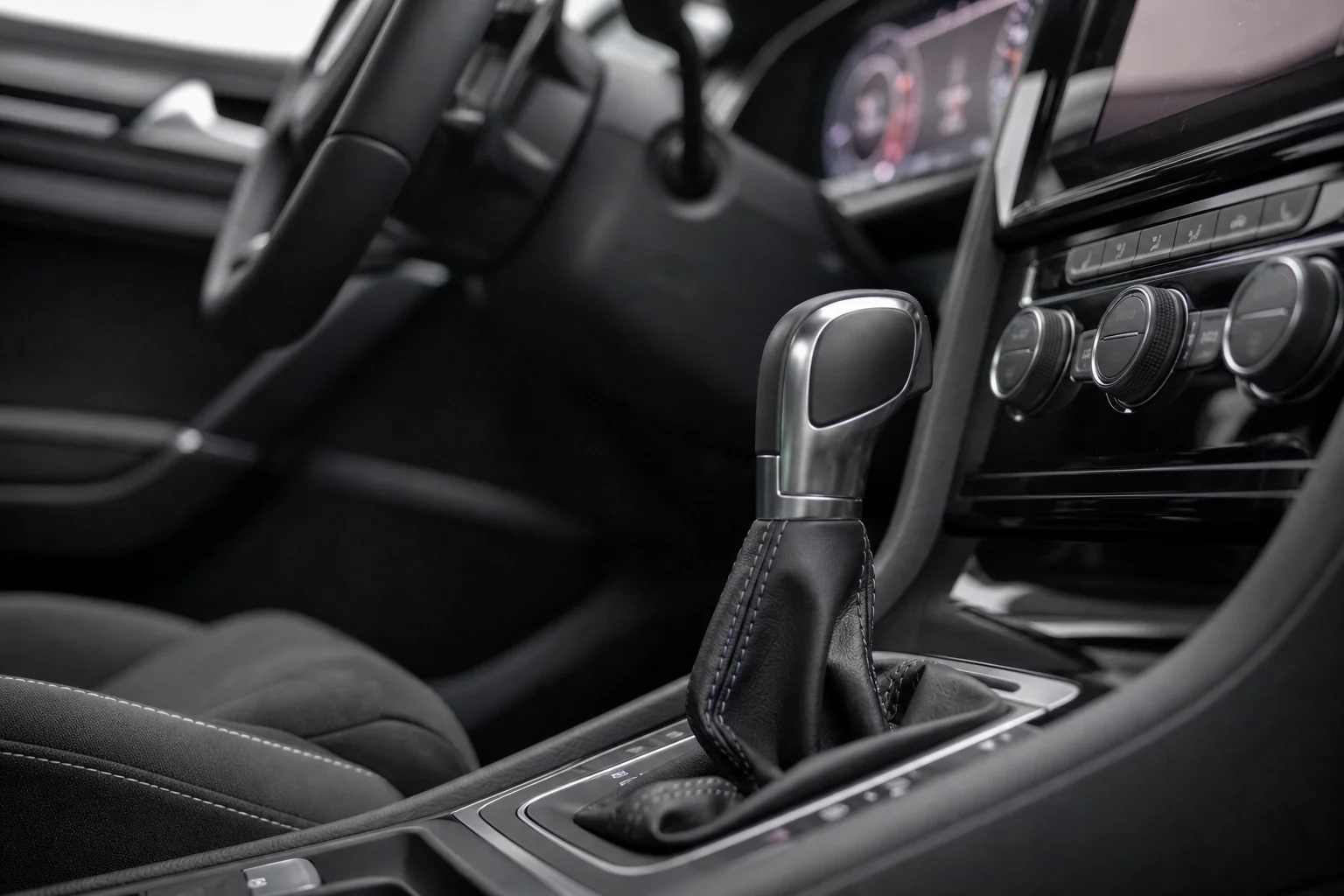
Your clutch transmits engine torque through friction — and it only has so much clamping force in reserve. A remap's extra torque can push a worn clutch from "coping" to slipping within weeks. Warning signs: revs rising without matching road speed, a burning smell after hills, a high biting point, and DMF rattle at idle. We check clutch condition before every flash — a healthy clutch on a healthy car handles Stage 1 from £150 comfortably. If it is marginal, we tell you before you spend, not after. Diagnostics first, custom file, factory backup, reversible.
The Short Answer
Will your clutch handle a remap? If it is healthy — almost certainly yes. Factory clutches carry a torque margin above the standard engine output, and a sensible Stage 1 calibration typically stays within or close to it. If the clutch is worn, glazed or already slipping occasionally, a remap will find it out fast, because the weakest link in a drivetrain always fails first and torque is the load it fails under.
That is why the order of operations matters: assess the clutch first, tune second. It is the same diagnostics-first principle behind everything we do in Haslingden — flashing extra torque through a dying clutch just brings the replacement bill forward and taints the remap experience with a fault it did not cause.
Who This Guide Is For
Manual car owners considering a remap, anyone with a vague suspicion their clutch is "not quite right", and higher-mileage owners weighing tuning against upcoming maintenance. DSG and automatic owners get their own section below — dual-clutch gearboxes have clutches too, they are just managed by software. If your car is an auto, our automatic gearbox tuning guide pairs well with this one.
How a Clutch Transmits Torque
A manual clutch is a friction sandwich. The friction disc sits between the engine's flywheel and a spring-loaded pressure plate. With the pedal up, the pressure plate clamps the disc against the flywheel, and friction carries engine torque into the gearbox. Press the pedal and the clamp releases, disconnecting drive.
The key idea: torque capacity = clamping force × friction × disc geometry. All three degrade over time — friction material wears thin, springs weaken, surfaces glaze from heat. A clutch does not fail like a light bulb; it fades, losing capacity gradually until one day the engine's torque exceeds what the disc can hold. That threshold moment is slip: the engine spins faster than the gearbox input, the excess energy becomes heat, and heat accelerates the wear that caused the slip. It snowballs quickly once it starts.
Now add a remap. Turbo engines gain torque most strongly in the mid-range — exactly where you drive every day. A clutch that held stock torque with 15% margin has no answer to 30% more, and the extra load arrives every single junction exit, not just on special occasions.
Clutch Slip — Symptoms and a Safe Self-Test
Early slip is subtle. Watch for:
- Revs flare without acceleration — rpm rises under load but road speed does not follow; most obvious in higher gears
- Burning smell — an acrid, hot-brakes-like smell after hills or towing is friction material cooking
- High biting point — the pedal engages near the top of its travel where it used to bite low
- Loss of pull on climbs — the engine sounds busy but the car labours, especially loaded
- Juddering take-up — vibration pulling away can be a contaminated or worn disc (or a tired DMF, below)
The classic self-test, done safely: on a quiet, dry, open road — somewhere like a clear stretch of Grane Road, not in traffic — settle into a high gear (fifth or sixth) at low rpm, around 1,500–2,000, then smoothly apply full throttle briefly. A healthy clutch sends the rev counter and speedometer climbing together, locked in step. If revs surge ahead while speed lags behind, the clutch is slipping. Lift off as soon as you see it — every second of slip is heat and wear. Do this once as a check, not repeatedly, and only where full attention on the road is possible.
The DMF — Your Flywheel's Hidden Wear Item
Most modern turbo diesels and many petrols use a dual-mass flywheel (DMF): two flywheel masses connected by internal springs that absorb the engine's torque pulses before they reach the gearbox. It is why a modern diesel idles smoothly instead of rattling your fillings.
DMFs wear just like clutches — the internal springs and friction surfaces degrade, and strong low-rpm torque (a diesel speciality, especially a remapped one) works them hard. Symptoms of a tired DMF:
- Rattle or clonk at idle that changes or disappears when you press the clutch pedal
- Vibration through the pedal or floor at low rpm under load
- Knocking on engine start-up or shutdown as the masses slap against worn stops
- Juddery take-up that a new clutch disc alone will not cure
Because the DMF lives behind the clutch, replacing one almost always means doing both — the labour is identical. It is the main reason clutch quotes on modern diesels look eye-watering compared to a 1990s hatchback.
Cost Reality — What Clutch Jobs Actually Run To
Straight talk: a clutch and DMF replacement on a typical modern turbo diesel commonly lands between £800 and £1,500+ at independent garages, driven mostly by labour (gearbox out) and the DMF's parts cost. Simpler solid-flywheel cars come in lower; premium and 4WD platforms higher. That is not an FLR service — we tune, we do not fit clutches — but it is context you need before tuning decisions:
- If the clutch is healthy, a remap does not bring this bill forward in any meaningful way — torque stays within what the parts were built to hold
- If the clutch is marginal, a remap accelerates the failure — you will pay the same bill, just sooner and angrier
- If a clutch job is imminent anyway, do it first, then tune — and consider the uprated options below while the gearbox is out
Nobody enjoys a four-figure maintenance conversation, but it beats discovering the truth halfway up the M65 with a caravan on the back.
Why We Check Before We Flash
Every FLR remap starts with a health assessment — fault codes, live data, and on manuals a clutch evaluation on the road test. It protects you from paying for performance a slipping clutch cannot deliver, and it protects the remap's reputation from wearing the blame for a mechanical fault that predates it. If we find slip or a rattling DMF, we tell you, explain the options and pause the tune. The map is not going anywhere; your factory file is archived for life and the calibration is reversible whenever circumstances change. That is the process on every job, and it is why "check before flash" is stitched through guides like signs you need a remap and is Stage 1 worth it.
Uprated vs OEM Clutches — Choosing at Replacement Time
If a clutch job is happening anyway, the tuning question is which parts to fit:
- Quality OEM replacement — right for Stage 1 and most Stage 2 cars. Factory take-up feel, quiet, and a fresh OEM clutch holds sensible tuned torque comfortably on most platforms.
- Uprated organic clutch — stronger clamp with near-stock pedal feel; the sweet spot for committed Stage 2 and modest Stage 3 builds.
- Paddle/cerametallic clutches — big torque capacity, heavy pedal, grabby take-up. Motorsport and serious Stage 3 territory — a daily-driving compromise most owners regret unless the build demands it.
- Single-mass flywheel conversions — cheaper and more durable than a DMF but add gear rattle and harshness. Fine on a project car; think hard on a refined daily.
Match the clutch to the torque target, not the marketing. We are happy to advise on spec alongside a custom tuning plan so the hardware and calibration agree.
DSG and Automatic Notes — Clutch Packs and Software
Dual-clutch gearboxes (DSG, PDK, EDC and friends) still rely on friction clutches — two of them, running in oil, clamped by hydraulic pressure under software control. The TCU decides how hard to clamp based on the torque it believes the engine is making. That creates a tuning subtlety: remap the engine without informing the gearbox and the TCU may under-clamp for the real torque, allowing micro-slip that wears the packs — or it simply limits torque and blunts your remap.
The answer is calibrating both sides together, which is exactly what a DSG / TCU tune from £150 does — raising clamping pressure and torque limits in step with the engine file. It is why the Stage 1 + DSG bundle at £275 exists and why we cover the software side in depth in our TCU tuning deep-dive. Conventional torque-converter autos have no take-up clutch to slip, but their internal clutch packs obey the same logic: software-managed pressure has to match engine torque.
When NOT to Remap a Manual Car
Hold off on tuning if any of these are true: the clutch fails the high-gear self-test or shows any slip symptom; there is DMF rattle, judder or start-up knock; a clutch replacement is already budgeted for the coming months (do it first); the car tows heavy loads on a clutch of unknown history; or the service history is too patchy to trust what is bolted to the flywheel. None of these mean never — they mean fix first, tune after, and enjoy the result on parts that can hold it.
Next Steps
Clutch feels strong and the car is healthy? Stage 1 from £150 with diagnostics included is the obvious starting point — and on DSG cars the bundle with gearbox tuning is the complete package. Unsure about symptoms? Start with diagnostics and an honest answer. As always: declare the remap to your insurer, factory file archived for life, fully reversible. More process questions are answered in our FAQ.
Send your VRN for a quote or call 01706 404 357. Workshop in Haslingden, mobile across Lancashire and the North West.
Clutch Health & Remapping — Common Questions
A healthy clutch handles a sensible Stage 1 comfortably — factory clutches carry a torque margin above stock output. A worn or marginal clutch will slip sooner with extra torque, which is why we assess clutch condition before every flash on manual cars.
On a quiet, dry road: high gear (fifth or sixth), low rpm around 1,500–2,000, then brief smooth full throttle. Revs and speed should climb together. If revs surge ahead of road speed, the clutch is slipping — lift off immediately and get it assessed.
Rattle at idle that changes when you press the clutch pedal, vibration at low rpm under load, knocking at start-up or shutdown, and juddery take-up. DMFs are usually replaced together with the clutch because the labour is the same gearbox-out job.
Not meaningfully on a healthy clutch driven sensibly — the torque stays within what the parts hold with margin. On an already-worn clutch, yes: extra torque accelerates an existing failure. The clutch's condition going in is the deciding factor.
Commonly £800–£1,500+ on modern turbo diesels at independent garages, driven by gearbox-out labour and DMF parts cost. Simpler solid-flywheel cars cost less; premium and 4WD platforms more. If the job is due, do it before tuning.
Not for Stage 1 on a healthy clutch — quality OEM parts are fine. Uprated organic clutches suit committed Stage 2 and beyond. Paddle clutches are for big builds and motorsport; their heavy, grabby take-up is a daily-driving compromise most owners regret.
Yes — DSGs use two oil-bathed clutch packs clamped by software-controlled hydraulic pressure. When the engine is remapped, the TCU should be calibrated to match so clamping pressure suits the real torque. That is what our DSG tune from £150 addresses.
No — if we find slip or serious DMF wear during pre-flash checks, we pause the tune and tell you honestly. Your factory file is archived and the remap can happen any time after the repair. Flashing torque through a dying clutch helps nobody.