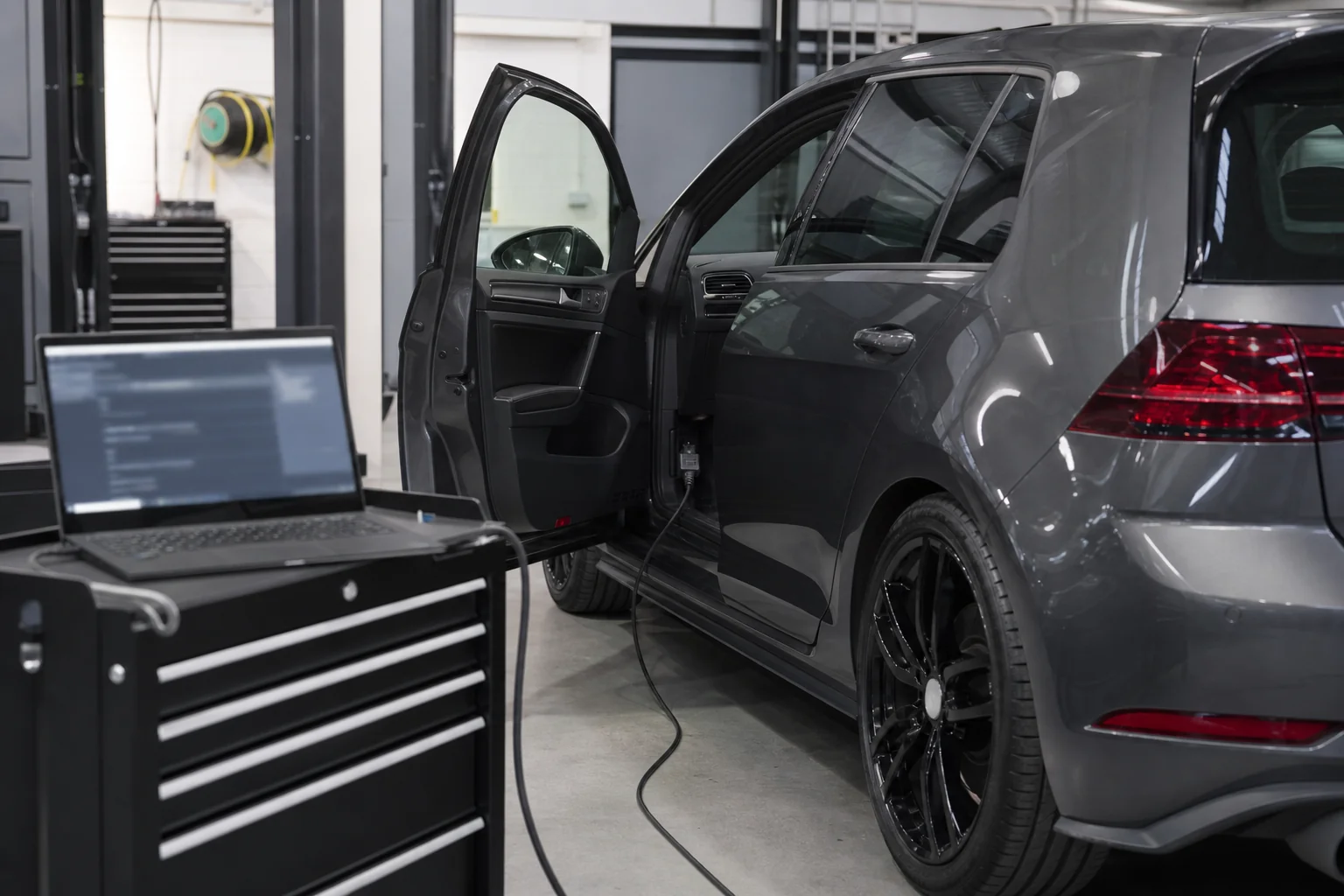
Ford remapping delivers strongly on healthy EcoBoost petrols and TDCi diesels — 15–30% more torque is typical Stage 1 territory on healthy examples. From £150 at FLR with diagnostics included. The non-negotiable on 1.0 EcoBoosts: wet-belt condition and service history checked before anything else. On Transits and TDCi diesels we verify turbo, EGR and DPF health first — and for vans doing real work, our van remapping is built around exactly that use case. Declare it to your insurer; emissions systems stay on.
The Short Answer
Should you remap your Ford? On a healthy, properly serviced example — yes, and the results are among the most satisfying we deliver. Ford went all-in on small turbocharged engines earlier than most, which means nearly every modern Ford on the road has the one ingredient software tuning needs: a turbo, and a conservative factory map controlling it.
The flip side is that some of those engines have maintenance requirements that are not optional. Chief among them: the wet-belt design on the small EcoBoost engines. Skip that history check and no remap — ours or anyone else's — is a good idea. At Finish Line Remaps in Haslingden, Stage 1 from £150 includes diagnostics precisely so these things get checked before your money is spent. For the general grounding, start with what a Stage 1 remap actually changes.
1.0 EcoBoost — Great Engine, One Critical Servicing Rule
The 1.0 EcoBoost three-cylinder powers an enormous slice of the UK's Fiestas, Focuses, Pumas and EcoSports. It is a genuinely clever engine — punchy, characterful and surprisingly responsive to a remap, because the factory calibration leaves usable margin on the table.
But the 1.0 EcoBoost uses a wet-belt design: the timing belt runs inside the engine, in oil. This makes belt condition and oil service history absolutely critical. It is widely documented that degraded oil and extended service intervals accelerate belt wear on wet-belt engines, and belt debris in the oil system is exactly as bad as it sounds. Our position is simple:
- No documented oil service history on a wet-belt engine? We talk before we tune.
- Belt replacement overdue by age or mileage? Belt first, remap second.
- Healthy, documented, in-spec car? Remap with confidence — it is a cracking little engine when cared for.
That check costs you nothing extra — it is part of the included diagnostics — and it is the most important paragraph on this page for 1.0 owners.
1.5 & 2.0+ EcoBoost — Fiesta ST, Focus ST and Friends
The larger EcoBoost engines in the Fiesta ST, Focus ST and various Mondeo, Kuga and S-Max models are strong tuning platforms. The ST models in particular were built for this: capable turbos, willing chassis, and a factory map calibrated with wide margins. A Stage 1 on a healthy ST sharpens throttle response and fills in the mid-range so the car pulls the way its badge always implied — typical Stage 1 gains on healthy examples sitting in the 15–30% more torque range depending on the exact engine and generation.
As direct-injection petrols, higher-mileage EcoBoosts can accumulate intake valve carbon over time — a characteristic of direct injection across the industry rather than a Ford-specific fault. We sanity-check airflow in live data during diagnostics; the background is in our carbon build-up guide. On earlier examples of some EcoBoost variants there is also documented history around cooling system issues, so we treat coolant level history and any overheating record as a worth-asking item rather than assuming all is well.
TDCi Diesels — Focus, Mondeo, Kuga and the Mighty Transit
The TDCi diesel family has hauled Britain's tools, caravans and sales reps for two decades. These engines remap beautifully because diesel torque from low revs is exactly what heavy use demands: a tuned TDCi holds gears longer, downshifts less and stops feeling strangled at motorway speed with a load on.
The Transit and the fleet angle
Transits are a huge part of our workload, and the case for tuning a working van is genuinely practical rather than performance-led: less gear-hunting when loaded, easier hill climbs, calmer motorway cruising and — driven sensibly — often better fuel economy because the engine labours less. For sole traders and fleets alike, our van remapping service is built around exactly this, and if you tow for work or leisure, our towing remap guide covers what changes.
DPF care on commercial use
One honest warning for diesel Fords used on short, stop-start routes: the DPF needs regular sustained runs to regenerate. A van that never gets a proper motorway run will fight its DPF whether it is remapped or not — and a DPF already struggling is a fix-first item, never a tune-around item. Emissions deletes are illegal for road use and we do not offer them, full stop. What we do offer is an honest diagnostic picture: regeneration history, soot loading data and a straight answer about whether your usage pattern suits a diesel at all.
Known Issues We Check First
| Engine family | Known history worth checking | How we check |
|---|---|---|
| 1.0 EcoBoost | Wet-belt condition — oil service history is critical | Service history review, belt age/mileage, honest conversation |
| Larger EcoBoost | Cooling system history on some earlier variants; intake carbon with mileage | Coolant history questions, live data airflow analysis |
| TDCi diesels | VNT vane sticking, EGR coking, DPF condition on high mileage | Boost trace, fault memory, regeneration data |
| Transit (heavy use) | DPF health on short-route usage; injector behaviour | Soot load data, live injector balance |
These are widely documented characteristics worth verifying — not predictions that your car is affected. Verifying them is what diagnostics from £40 exists for, and it is included with every Stage 1 we do.
Automatic and Powershift Pairing
Ford's automatic gearboxes — from the older Powershift units to the modern torque-converter autos — each carry their own transmission calibration. Where the gearbox software supports it, pairing an engine remap with gearbox/TCU tuning from £150 gives a more cohesive result: shift points that use the new torque instead of shifting around it. The engine-plus-gearbox bundle is from £275. We confirm what is available for your specific gearbox from the VRN, because coverage varies by unit — the general principles are in our gearbox tuning explained guide.
Warranty, Insurance and the Rules
The universal notes, applied to Fords. A remap is a material modification in the UK — declare it to your insurer, because undeclared tuning can invalidate your policy. On newer Fords under manufacturer warranty, a detected modification can affect goodwill on powertrain claims — read our warranty guide for the balanced picture. We archive your factory file for life, so the car can be returned to stock for any reason at any time.
Who Should NOT Tune Their Ford
- 1.0 EcoBoost with no oil service history or an overdue wet-belt — belt and servicing first, every time
- Any car in limp mode or with warning lights — diagnose first; more power on top of a fault helps nobody
- Diesels with unresolved DPF warnings — fix the regeneration problem before tuning
- Short-trip-only diesel vans — the usage pattern needs addressing, not the map
- Slipping clutches — common on hard-worked STs and loaded vans; more torque accelerates the failure
- Anyone unwilling to declare to insurance — the exposure dwarfs the gain
How We Tune Fords at FLR
- VRN quote. We identify the exact engine and generation — EcoBoost variants matter — and quote honestly.
- Diagnostics first. Fault memory, live data, boost behaviour, wet-belt history on small EcoBoosts, DPF data on diesels. Included.
- Custom calibration. Factory file archived permanently, new file written for your exact engine code via custom tuning — never a generic download.
- Verification. Post-flash live data, road test on real Lancashire hills, written handover and aftercare.
Next Steps
Healthy Ford, documented history, and a factory map holding it back? Stage 1 from £150 is the strongest value upgrade you can give it — car or van. Send your VRN via the contact page, call 01706 404 357, or check the FAQ for anything we have missed. Workshop in Haslingden, mobile across Lancashire and the North West.
Ford Remapping — Common Questions
On a healthy, properly serviced EcoBoost — yes. These turbocharged petrols respond well to a custom Stage 1, with typical gains on healthy examples in the 15–30% more torque territory. On the 1.0 EcoBoost specifically, wet-belt condition and oil service history must be verified first — we check both in the included diagnostics.
The 1.0 EcoBoost runs its timing belt inside the engine, in oil. Degraded oil and extended service intervals are widely documented to accelerate belt wear, and belt debris in the oil system causes serious damage. It is a servicing-criticality issue rather than a universal fault — a documented, in-spec car is fine to tune; an unknown history means belt and servicing checks come first.
Stage 1 starts from £150 at Finish Line Remaps, including diagnostics, a custom-written file, permanent factory backup and verification. Gearbox/TCU tuning is from £150 where supported, and the engine-plus-gearbox bundle is from £275. Vans are quoted the same honest way — send your VRN.
The ST models are among the best remap candidates Ford makes — capable turbos and conservative factory maps mean a custom Stage 1 sharpens response and fills in the mid-range noticeably. Clutch health matters on hard-driven cars, so we assess it during diagnostics before flashing.
For working vans, often more so than for cars — less gear-hunting when loaded, easier hills, calmer cruising and often improved economy when driven sensibly. We verify turbo, EGR and DPF health first, especially on vans doing short stop-start routes. See our van remapping service for the fleet angle.
A properly written map keeps all emissions systems active and does not cause DPF problems. But a DPF already struggling — usually from short-trip use — is a fix-first item before any tuning. DPF removal is illegal for road use and we do not offer it.
Yes. A remap is a material modification in the UK and must be declared to your insurer — that applies to vans and company vehicles too. Undeclared tuning can invalidate the policy entirely.
Yes. We read and archive your original factory file before flashing anything, and the car or van can be returned to stock calibration at any time — useful for dealer visits, fleet handbacks or resale.