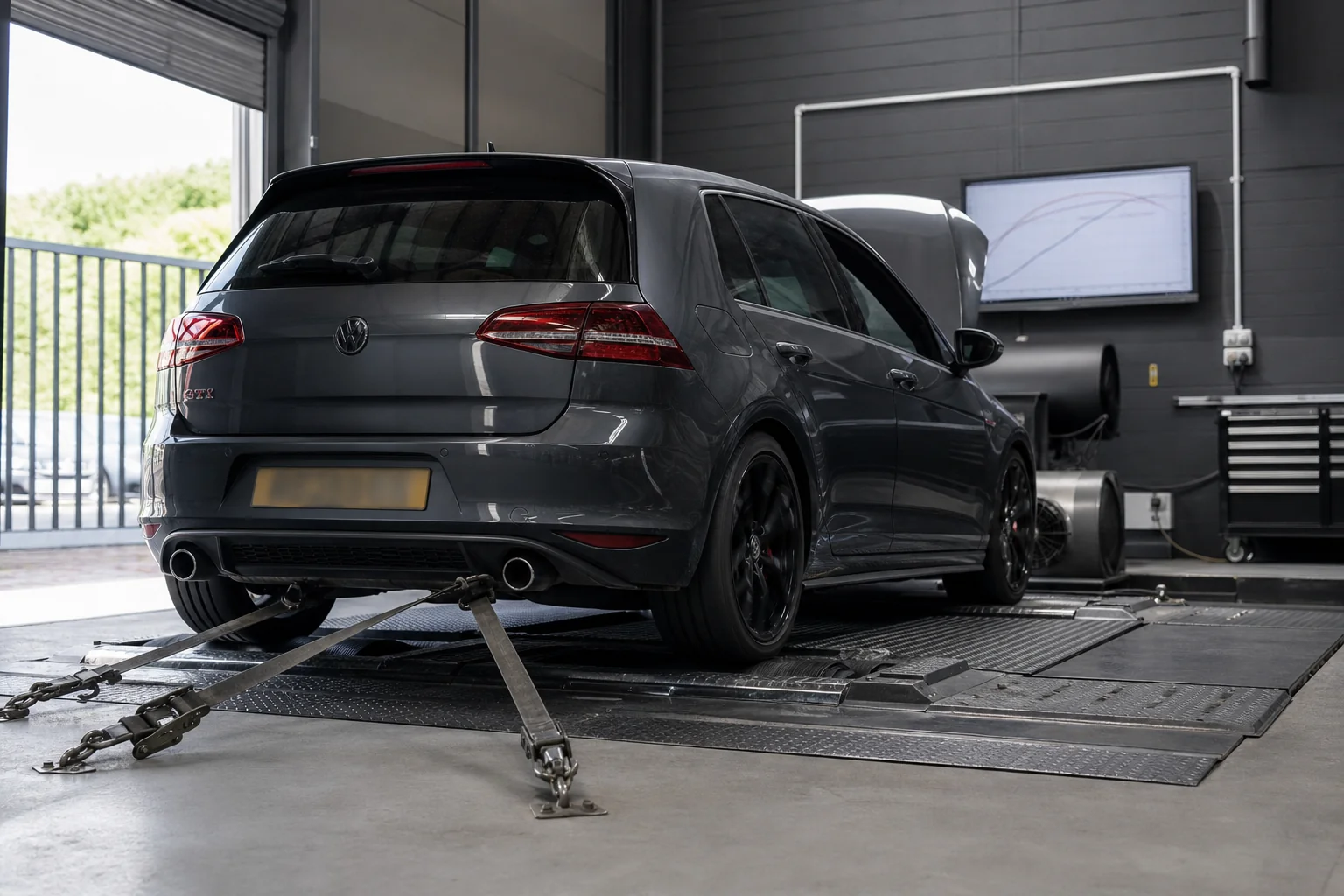
Mercedes remapping works very well on the OM651 diesel family and the modern petrol turbos — 15–30% more torque is typical Stage 1 territory on healthy examples, felt most in the mid-range where a loaded car or van lives. From £150 at FLR with diagnostics included. On earlier OM651s we pay attention to injector history; on all high-mileage diesels we verify turbo, EGR and DPF health first. Automatic cars benefit from TCU tuning alongside — the £275 bundle covers both. Dealers can detect modified software; we tell you that up front.
The Short Answer
Should you remap your Mercedes? On a healthy example, yes — and more than most brands, the answer applies equally whether you drive a C220d to the office or a Sprinter for a living. Mercedes diesels are calibrated conservatively at the factory, and the character of the gain — big, usable mid-range torque — matches how these vehicles are actually used: loaded, towing, cruising.
As always, healthy is the operative word. The OM651 has been around long enough that its early-years history is well documented, and high-mileage diesels of any badge share the same wear points. At Finish Line Remaps in Haslingden, Stage 1 from £150 includes the diagnostic check that sorts the strong candidates from the fix-first cases — plus a custom-written file, permanent factory backup and post-flash verification. Background reading: what a Stage 1 remap actually changes.
OM651 — The Diesel That Powers Half the Range
The OM651 2.1 (badged 200d, 220d, 250d across the years) served in the C-Class, E-Class, GLC, Vito, Sprinter and more from around 2009 onwards. Its ubiquity is exactly why we know it so well — and why it is one of our most-tuned engines.
What a remapped OM651 feels like
The stock calibration is famously relaxed. A custom Stage 1 wakes up the mid-range so the car stops feeling like it is saving itself for something: overtakes on the A56 happen in one motion, the climbs out of Rossendale stop demanding a downshift, and a loaded Vito or Sprinter pulls like it finally means it. Typical Stage 1 gains on healthy examples sit in generic 15–30% more torque territory — we confirm expectations for your exact variant from the VRN.
The early injector history
The honest note: early years of the OM651 have a widely documented history of injector issues, and Mercedes addressed the matter in period. Most affected vehicles were sorted long ago, and later engines moved on. But it is exactly the kind of history worth verifying rather than assuming — so on earlier OM651s we review injector behaviour in live data, check the fault memory and ask about history before quoting. A lazy or leaking injector is a fix-first item on any diesel, tuned or not.
Standard high-mileage diesel checks
- Turbo and VNT health — sticking variable vanes on high-mileage diesels show up in the boost trace; see turbo health before a remap
- EGR and inlet condition — gradual coking restricts airflow over big mileages
- DPF regeneration health — a struggling DPF is fixed first, never tuned around; deletes are illegal for road use and we do not offer them
Mercedes Petrol Turbos
The modern turbocharged petrol four-cylinders and six-cylinders — in everything from the A-Class through the C and E ranges — are strong Stage 1 candidates too. The pattern is familiar: conservative factory maps, capable turbos, and gains felt as sharper throttle and a fuller mid-range rather than a peaky top-end number.
Being direct-injection engines, higher-mileage examples gradually accumulate intake valve carbon — an industry-wide direct-injection characteristic rather than a Mercedes fault — and we sanity-check airflow behaviour during diagnostics. Details in our carbon build-up guide. AMG models are a separate conversation and quoted individually via custom tuning.
7G and 9G Automatic Pairing
Nearly every Mercedes we tune is an automatic — 7G-Tronic or 9G-Tronic — and the gearbox has its own control unit with its own conservative calibration. Shift points, response and torque limits are all software, and a gearbox left on factory settings will manage your newly tuned engine with old assumptions.
Pairing the engine map with TCU tuning from £150 aligns the whole drivetrain: crisper shifts, more intelligent kickdown, torque handling matched to the new output. The engine-plus-gearbox £275 bundle is our standard recommendation on automatic Mercedes. The principles are covered in our gearbox tuning explained guide — different badge on the box, same logic.
The Sprinter and Vito Fleet Angle
Sprinters and Vitos are working vehicles, and the case for tuning them is practical: a loaded van that holds its gear on the M66 climb instead of hunting, calmer motorway cruising, easier overtakes with a full load, and — driven sensibly — often improved economy because the engine labours less. For couriers, trades and fleets, that adds up over a year of mileage.
Our van remapping service is built around commercial use, including the honest conversation about DPF care: a diesel van doing short, stop-start urban routes will struggle to regenerate its DPF regardless of the map, and we would rather tell you that before you spend money. Fleet enquiries are welcome — one van as a trial, then the rest if the drivers approve, which they generally do.
Known Issues We Check First
| Engine family | Known history worth checking | How we check |
|---|---|---|
| Early OM651 | Injector history (documented early years) | Live injector data, fault memory, history review |
| All OM651 / high-mileage diesels | VNT vane sticking, EGR coking, DPF condition | Boost trace, live data, regeneration history |
| Petrol turbos | Intake carbon with mileage (direct injection characteristic) | Live data airflow analysis |
| 7G/9G automatics | Adaptation state and shift quality on high mileage | Adaptation values, road test |
Framed honestly: these are documented characteristics worth verifying, not defects we guarantee your car has. Verifying them is what diagnostics from £40 is for — included with every Stage 1.
Dealer Detection, Warranty and Insurance
Mercedes dealers can detect modified software. Modern diagnostic systems can verify the calibration in an ECU against what the factory expects for the VIN, so a remap is visible to anyone who checks properly — and we will not pretend otherwise. If your car or van is under manufacturer warranty and you rely on that cover for powertrain claims, understand the goodwill risk before tuning. Out of warranty — most of what we see — it is a far smaller consideration. Full picture in our dealer detection guide and warranty facts.
Two universal rules: declare the remap to your insurer (a material modification in the UK — undeclared tuning can invalidate your policy), and emissions systems stay active. AdBlue, DPF and EGR deletes are illegal for road use and we do not offer them.
Who Should NOT Tune Their Mercedes
- Cars or vans in limp mode or with warning lights — diagnose first, always
- Early OM651s with rough running or injector-related codes — injectors first, tuning second
- Diesels with unresolved DPF or AdBlue warnings — fix-first items, no exceptions
- Short-trip-only diesel vans — the usage pattern is the problem, not the calibration
- Nearly-new vehicles where warranty goodwill matters most — wait, or proceed with eyes open
- Anyone unwilling to declare to insurance — including company vehicles and fleets
How We Tune Mercedes at FLR
- VRN quote. Exact engine and gearbox identified from your registration, honest quote returned.
- Diagnostics first. Fault memory, live data, injector balance on OM651s, boost behaviour, DPF data, gearbox adaptations. Included with Stage 1.
- Custom calibration. Factory file read and archived for life, new file written for your exact variant — never a generic download.
- Verification. Post-flash live data, road test on the hills we know, written handover and aftercare advice.
Next Steps
If your Mercedes is healthy and the factory calibration feels like it is holding back a bigger engine — it probably is. Stage 1 from £150, TCU from £150, both for £275. Send your VRN via the contact page, call 01706 404 357, or browse the FAQ. Workshop in Haslingden, mobile across Lancashire and the North West.
Mercedes Remapping — Common Questions
On a healthy OM651 or other Mercedes turbo diesel — yes. The factory calibration is conservative, and a custom Stage 1 delivers big, usable mid-range torque that suits exactly how these cars and vans are used: loaded, towing and on motorway runs. Typical gains on healthy examples sit in the 15–30% more torque territory.
Stage 1 starts from £150 at Finish Line Remaps, including diagnostics, a custom-written file, permanent factory backup and verification. TCU/gearbox tuning is from £150, and the engine-plus-gearbox bundle is £275 — our standard recommendation on 7G and 9G automatic cars.
Early years of the OM651 have a widely documented injector history that Mercedes addressed in period — most affected vehicles were sorted long ago. We treat it as a worth-checking item, not a guaranteed fault: on earlier engines we review injector behaviour in live data and check fault memory before quoting.
On 7G-Tronic and 9G-Tronic cars, yes — the gearbox has its own conservative software controlling shift points and torque limits. Tuning engine and TCU together (£275 bundle) delivers a noticeably more cohesive drive than an engine map alone.
For working vans, the case is strongly practical: less gear-hunting when loaded, easier hills, calmer cruising and often better economy driven sensibly. We check DPF health and usage patterns first — a short-trip-only diesel van has a usage problem no map can fix.
Yes. Dealer diagnostic systems can verify the software in your ECU against the factory calibration for your VIN, so modifications are detectable by anyone who checks properly. If you rely on manufacturer warranty goodwill, weigh that risk before tuning. We never claim undetectable tuning.
Yes. A remap is a material modification in the UK and must be declared — for private cars, company vehicles and fleet vans alike. Undeclared tuning can invalidate the policy entirely.
We archive your original factory file permanently and can return the vehicle to stock calibration at any time. Be aware that returning to stock does not guarantee previously logged evidence of modification disappears from dealer systems.