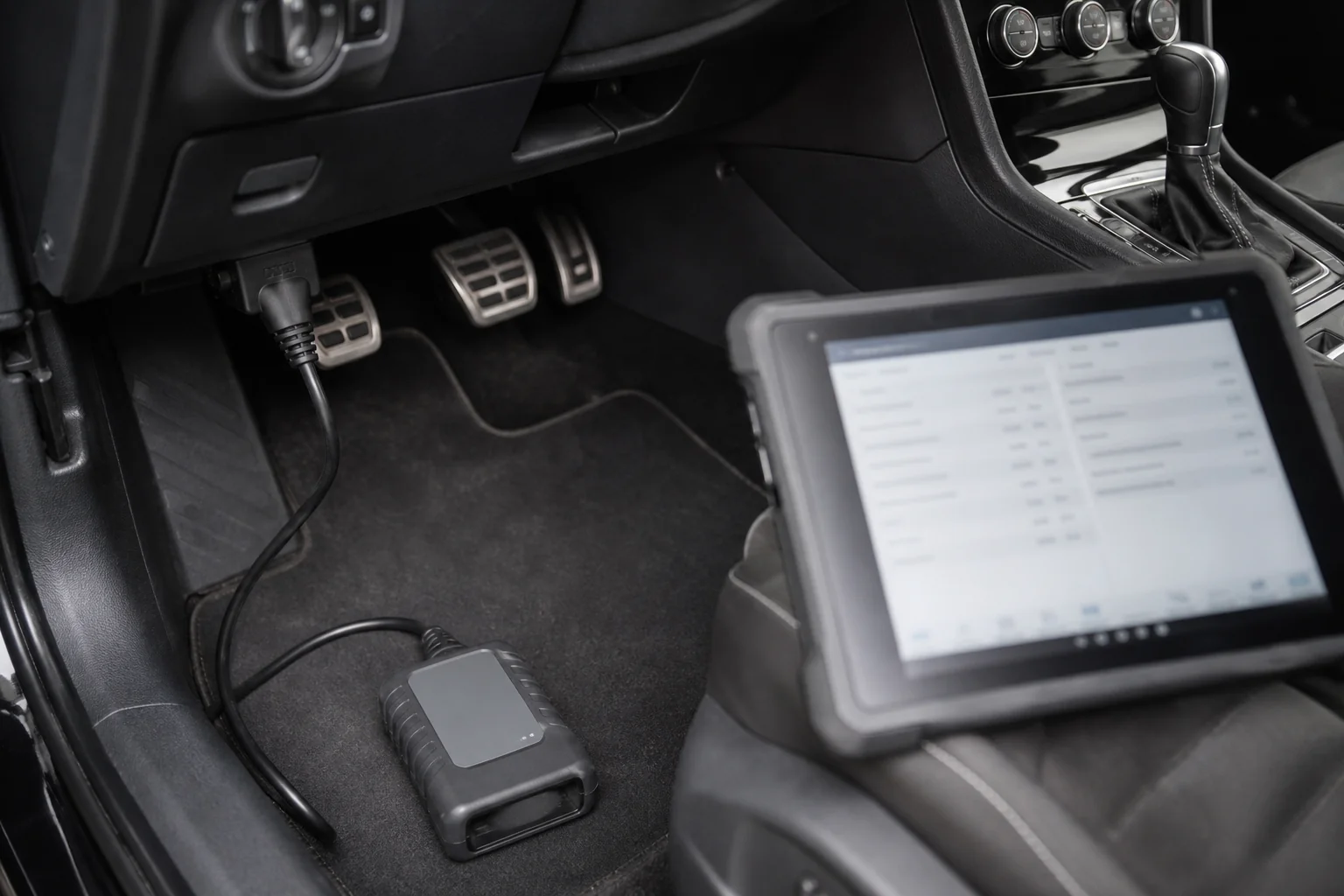
The ten codes we see most before remaps: P0299, P0234, P2002, P2453, P0401, P0087, P0171, P0300, P0016 and P20EE — boost, DPF, EGR, fuelling, misfires, timing and AdBlue. Every one of them means fix first, map second. A stored code is a symptom, not a diagnosis — we read codes alongside live data, never just clear them. Diagnostics from £40 at FLR, and it is included with Stage 1 from £150.
The Short Answer
If your car has a stored fault code, it is not ready for a remap — yet. That is the whole answer. A remap adds load to every system the code is complaining about, and flashing power onto a car with an unresolved boost leak, blocked DPF or lazy EGR valve turns a £40 fix into a much bigger bill.
The good news: most of the codes below are common, well-understood and fixable. At Finish Line Remaps every booking starts with a diagnostic scan and live-data review, so you find out exactly what is stored before any file is written. If the scan is clean, we map. If it is not, we tell you what the code means, what it usually costs to put right, and whether it genuinely blocks the remap or not.
This guide applies to anyone booking — or thinking about booking — a remap on a used car. High-mileage diesels around the M65 corridor are the most frequent offenders, but turbo petrols throw their share too.
Why Fault Codes Matter Before a Remap
The ECU stores a fault code when a sensor reading falls outside the window the factory calibration expects. Sometimes it also triggers limp mode — reduced power to protect the engine. We cover that fully in limp mode explained, but the short version is this: the ECU is already telling you something is wrong. A remap raises boost, fuelling and torque targets. If the underlying fault is still there, you have just asked a struggling system to work harder.
There is a second reason. A remap changes the calibration the ECU compares its sensors against. Diagnose a fault after mapping and you are working with two variables instead of one. Fix first and both jobs stay simple — which is why our process is diagnostics, then custom file, with your factory backup archived so everything stays reversible.
Boost Codes — P0299 and P0234
P0299 — Turbo Underboost
The most common pre-remap code we see, full stop. It means the ECU asked for a certain boost pressure and the turbo could not deliver it. Typical causes: split or loose intercooler pipes, a sticking variable-vane (VNT) mechanism on the turbo, a lazy boost control solenoid, or a leaking actuator diaphragm. On many diesels it drops the car straight into limp mode.
Fix-first reasoning is simple — a remap raises boost targets. If the turbo cannot hit stock targets, it certainly cannot hit tuned ones. Often the fix is a £20 hose clamp or a split pipe, not a turbo. Sometimes it genuinely is the turbo, and you want to know that before spending on software.
P0234 — Turbo Overboost
The opposite problem: boost pressure exceeded the target. Usual suspects are a sticking wastegate or VNT mechanism, a faulty boost pressure sensor, or vacuum leaks in the control lines. Overboost is arguably more urgent than underboost — sustained over-target pressure stresses the turbo, head gasket and pistons. The ECU cuts power hard to protect itself, and it is right to. Never map over an overboost code.
DPF Codes — P2002 and P2453
P2002 — DPF Efficiency Below Threshold
The ECU believes the diesel particulate filter is no longer trapping soot the way it should. Causes range from a genuinely full or damaged filter to failed regenerations from short-trip driving — extremely common on school-run diesels around Rossendale that never get a proper motorway leg. Sometimes the filter is fine and a sensor is lying, which is why the next code matters.
P2453 — DPF Differential Pressure Sensor Performance
This one points at the sensor that measures pressure across the DPF, not necessarily the filter itself. A drifted sensor or a blocked sensor pipe can convince the ECU a healthy filter is blocked — or hide one that genuinely is. We wrote a full guide on this: DPF pressure sensors — the small part behind big warnings. Either way, DPF codes must be resolved before mapping, and no — removing the DPF is not the answer. Emissions deletes are illegal for UK road use and FLR does not offer them. Legal options live on our DPF solutions page.
EGR — P0401
P0401 — insufficient EGR flow. Exhaust gas recirculation valves live a hard life on diesels: hot, sooty exhaust gas passes through them constantly and carbon builds up until the valve sticks or the passages clog. Symptoms are hesitation, rough idle and — on many cars — limp mode.
Typical fixes are cleaning the valve and passages or replacing the valve. What we will not do is "map it out" for a road car — EGR delete falls under the same emissions law as DPF removal. Fix the flow problem, then tune. The honest conversation about what remapping can and cannot do for a soot-prone diesel is in DPF and remapping — the facts.
Fuelling Codes — P0087 and P0171
P0087 — Fuel Rail Pressure Too Low
The high-pressure fuel system could not hold the pressure the ECU demanded. On common-rail diesels the usual causes are a tired high-pressure pump, leaking injectors, a sticking pressure regulator or a clogged fuel filter. This is a hard stop for tuning: a remap demands more fuel delivery, and a system that cannot meet stock demand will run lean under load — which on a diesel means heat, and heat kills pistons. Cheapest first: when did the fuel filter last get changed?
P0171 — System Too Lean (Bank 1)
Mostly a petrol code. The ECU is adding more fuel than expected to hit its target mixture, which means unmetered air is getting in or the airflow reading is wrong. Vacuum leaks, split intake boots, a contaminated MAF sensor or a weak fuel pump are the usual causes. Because MAF faults are such a frequent culprit, we cover them separately in MAF & MAP sensor issues. Lean running plus more boost is a detonation recipe — fix it first.
Misfires and Timing — P0300 and P0016
P0300 — Random / Multiple Cylinder Misfire
Combustion is failing across more than one cylinder. On petrols: worn plugs, tired coil packs, injector issues or low fuel pressure. On diesels: injectors or compression. A misfiring engine sends raw fuel into the catalytic converter and can destroy it. No responsible tuner maps a misfiring engine — the fix is often as simple as plugs and a coil, and the car needs it whether you remap or not.
P0016 — Crank / Cam Position Correlation
The crankshaft and camshaft sensors disagree about where the engine is in its rotation. Causes range from a cheap fix (a failing sensor) to a serious one (a stretched timing chain — common on certain well-known petrol engines). This code demands proper investigation before driving, never mind tuning. If it is chain stretch, catching it early is the difference between a chain kit and a new engine.
AdBlue — P20EE
P20EE — SCR NOx catalyst efficiency below threshold. Increasingly common on Euro 6 diesels. The selective catalytic reduction system — the AdBlue side — is not converting NOx the way the ECU expects. Causes include a failing NOx sensor (frequent and not cheap), crystallised AdBlue in the injector or lines, a tired dosing pump or genuine catalyst degradation. Many cars pair this code with a countdown warning that will eventually refuse to restart the engine, so it cannot be ignored. Same rule as DPF and EGR: the AdBlue system stays on and working. Diagnose which component failed rather than guessing — NOx sensors get blamed for dosing faults all the time.
How We Actually Diagnose — Codes Plus Live Data
A fault code tells you which test failed. It does not tell you why. P0299 does not say "split intercooler hose, nearside, £15" — it says boost was low. This is why our fault-finding service pairs every scan with live data: watching requested versus actual boost, fuel rail pressure, MAF readings and DPF differential pressure while the engine runs. The gap between what the ECU asks for and what it gets is where the real diagnosis lives.
What we never do is clear codes and hope. Clearing a code deletes the evidence, resets the readiness monitors and guarantees the light comes back — usually a week after someone has paid for a remap. If a tuner's "health check" is clearing your codes before flashing, walk away.
Want to look up a code yourself first? Our FAQ page includes an interactive fault-code explorer covering these ten and plenty more.
What Fixing These Codes Typically Costs
Every car is different, but honest ballparks help you plan. A split boost hose or fuel filter is often a sub-£50 fix. EGR cleaning or a replacement valve sits in the low-to-mid hundreds depending on access. Coil packs and plugs are usually modest. Sensors — DPF differential pressure, NOx, MAF — range from around £40 to several hundred for NOx units. The expensive outcomes (turbo, timing chain, injectors, DPF replacement) are exactly why you diagnose before you spend: most codes turn out to be the cheap cause, and confirming which one you have costs from £40 standalone at FLR — and it is included with every remap booking anyway.
When NOT to Book a Remap
- Any of these ten codes stored or pending — fix first, always
- Limp mode active — see the codes that put cars in limp mode before a remap
- A warning light someone has "sorted" by clearing it — it will return; find out why it set
- Repeated regenerations, smoke or hesitation with no light yet — codes lag symptoms; scan anyway
None of this means the remap is off the table forever. It means the order matters. Fixed properly, most of these cars go on to map beautifully — and the diagnosis often costs less than owners feared.
Next Steps
If your car has a light on — or you just want certainty before tuning — book a diagnostic scan from £40 and we will tell you exactly what is stored, what it means and what fixing it should cost. If the scan is clean, Stage 1 starts from £150 with diagnostics included, a custom-written file and your factory backup archived for life. Not sure whether your symptoms even need a remap? Start with signs your car needs a remap, then send us your VRN or call 01706 404 357. Workshop in Haslingden, mobile across Lancashire and the North West.
Fault Codes Before Remapping — Common Questions
Not at FLR — and not at any tuner worth booking. A stored code means a system is already outside its expected window, and a remap adds load to that system. We diagnose and fix first, then map. Diagnostics is included with every remap booking.
P0299 turbo underboost, by some distance. On used turbo diesels the cause is usually a split or loose boost pipe, a sticking VNT mechanism or a lazy boost solenoid — often a cheap fix, but one that must happen before any tuning.
Clearing a code deletes the evidence without fixing the cause. The code returns — usually within days — and now it is tangled up with a new calibration. We read codes alongside live data to find the actual fault, and we never clear-and-flash.
No. Many of the codes in this guide trace back to split hoses, clogged filters, dirty EGR valves or tired coil packs — modest fixes. Proper diagnosis from £40 tells you which cause you have before you spend anything on parts.
No — removing or defeating DPF, EGR or AdBlue systems is illegal for UK road use, and FLR does not offer it. We diagnose why the system faulted and fix it properly. Legal options are covered on our DPF solutions page.
Usually yes — once the fault is repaired and the code no longer resets, the ECU restores full power. Some cars clear limp mode immediately after the fix; others need the code cleared once the repair is confirmed. See our limp mode guide for the full picture.
Standalone diagnostics starts from £40, including a full code read and live-data review with a plain-English explanation of the findings. It is included free with every remap booking — Stage 1 starts from £150 with diagnostics, custom file and factory backup.
Yes, and you get one at FLR regardless. Codes can be stored or pending without a light showing, and live data reveals problems — lazy sensors, marginal boost, high soot load — before they trigger anything. That is why diagnostics comes first on every booking.