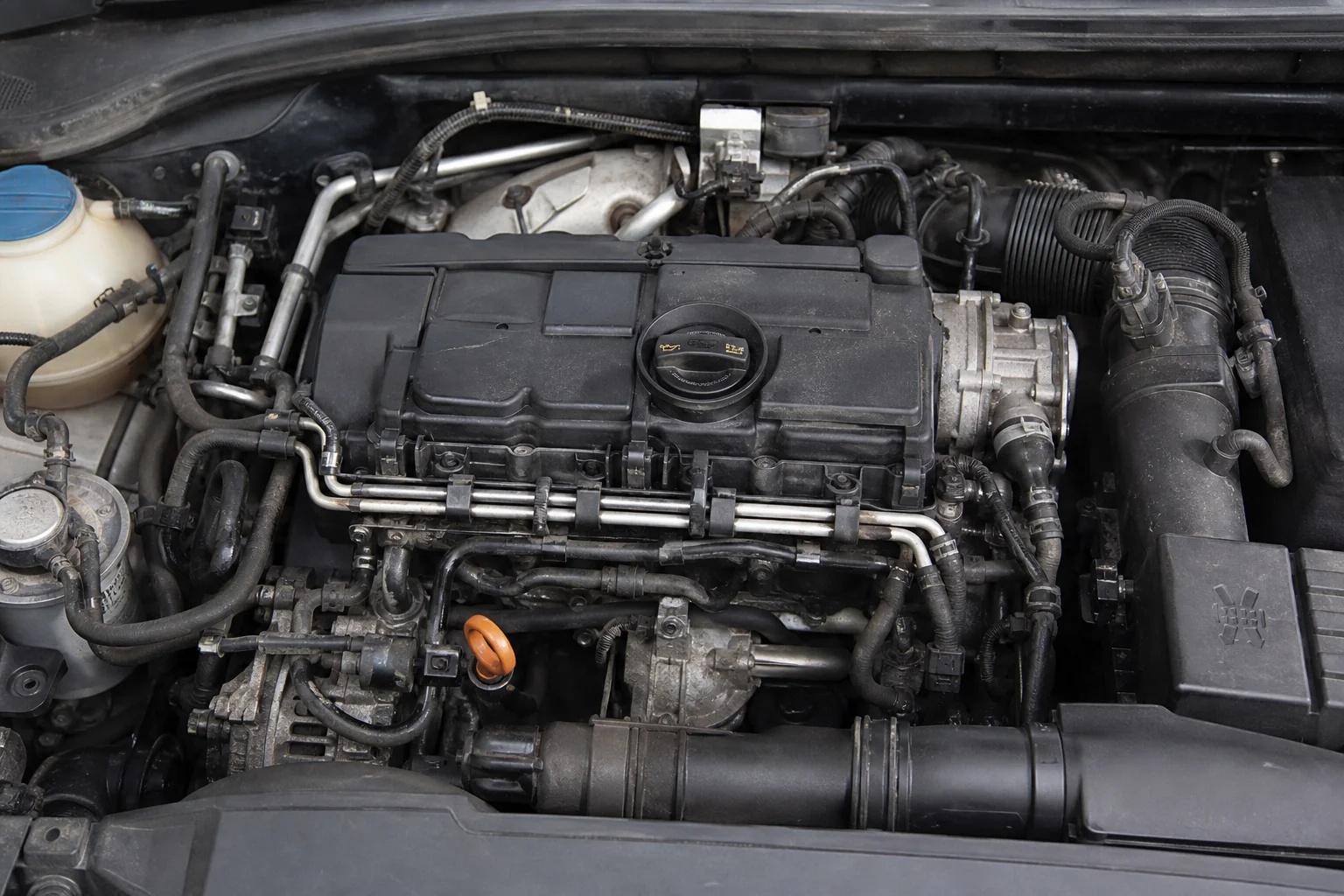
A Golf TDI remap is the best value change you can make to a diesel Golf: a Mk7 2.0 TDI 150 goes from 148 to around 188 bhp and from 340 to around 420 Nm, from £150 at FLR, diagnostics included. The GTD becomes the fast, frugal cruiser it always should have been. The non-negotiables: DPF, EGR and AdBlue systems stay fully active (deletes are illegal for road use and we do not offer them), and the health of those systems gets checked before we flash anything. DSG diesel? The from-£275 bundle finishes the job. Every Golf engine in one place: VW Golf remap guide.
The Short Answer
Should you remap your diesel Golf? If the emissions systems and turbo are healthy — yes, and you will feel it more often than any petrol owner feels theirs. Diesel torque arrives from just above idle, which means the gains live exactly where real driving happens: pulling out of junctions, climbing out of Rossendale, overtaking on the A56 without dropping two gears and waiting.
At Finish Line Remaps, Stage 1 from £150 includes diagnostics, a custom-written file for your exact engine code, a permanent factory backup and post-flash verification. Chasing running costs rather than pace? The same £150 buys an economy-biased calibration instead.
Typical Stage 1 Gains by Golf Diesel — in BHP
Figures are typical results on a healthy car. Every engine code and software version differs — we confirm from your VRN before booking:
| Model | Stock | Typical Stage 1 |
|---|---|---|
| Mk7 1.6 TDI (105–115) | 104–113 bhp / 250 Nm | ~135 bhp / 310 Nm |
| Mk7 2.0 TDI 150 | 148 bhp / 340 Nm | ~188 bhp / 420 Nm |
| Mk7/7.5 GTD | 181 bhp / 380 Nm | ~220 bhp / 450 Nm |
| Mk8 2.0 TDI 115 | 113 bhp / 300 Nm | ~165 bhp / 380 Nm |
| Mk8 2.0 TDI 150 | 148 bhp / 360 Nm | ~190 bhp / 430 Nm |
| Mk8 GTD | 197 bhp / 400 Nm | ~235 bhp / 460 Nm |
Note the torque columns — that is the diesel story. An 80 Nm gain on a 2.0 TDI is felt within the first hundred yards, and it changes the car's character permanently: less downshifting, less noise, more relaxed progress at the same speeds.
What a TDI Stage 1 Feels Like
The EA288 (Mk7 era) and EA288 evo (Mk8) respond to raised boost, sharper injection timing and lifted torque limiters with the kind of low-rev muscle petrol drivers need 4,000 rpm to find. A tuned GTD in particular becomes what the brochure implied: GTI-adjacent pace with 50+ mpg still available on a gentle motorway run. And because a well-written diesel map improves combustion efficiency in normal driving, many owners see an economy gain when driven the same as before — the honest numbers are in our economy remap guide.
Towing? Diesel torque is exactly what a loaded caravan or trailer wants, and a remapped TDI holds motorway inclines a gear higher. Specifics in our remap for towing guide.
DPF, EGR and AdBlue — The Legal Line, Stated Plainly
Every diesel Golf we tune keeps its emissions systems fully active. DPF, EGR and AdBlue/SCR deletes are illegal for road use in the UK, they fail MOTs, and we do not offer them — full stop. A properly written Stage 1 needs none of that: the gains in the table above come from calibration headroom, not from stripping the car's emissions control.
What the emissions systems do demand is health. A DPF that is struggling to regenerate is a fix-first item, never a tune-around item — and short-trip diesel life is usually the real culprit, explained in our DPF regeneration guide. The Mk8's twin-dosing AdBlue system is effective and, on a healthy car, entirely compatible with tuning — it simply stays untouched.
DSG Diesels — DQ200, DQ250 and DQ381
Diesel Golfs carry three different DSGs, and the difference matters:
- DQ200 (7-speed dry clutch) — fitted to the 1.6 TDI and some lower-output 2.0s. Its dry clutches carry a modest torque ceiling, so the tuned torque gets capped to what the box genuinely holds. You still gain strongly — the cap is honest engineering, not lost value.
- DQ250 (6-speed wet clutch) — most Mk7 2.0 TDIs and GTDs. Holds around 430 Nm; a tuned GTD sits above that, which is why the TCU tune's raised clamping pressure belongs in the job.
- DQ381 (7-speed wet clutch) — Mk7.5 onwards. More margin, and TCU tuning still transforms shift behaviour and response.
The engine + DSG bundle from £275 covers both sides in one visit — on a DSG GTD it is the single most complete upgrade the car can have.
Known Diesel Issues We Check First
| Item | Why it matters | How we check |
|---|---|---|
| DPF state | A struggling DPF is a fix-first item — more fuelling through a blocked filter helps nobody | Regeneration data, soot/ash load, pressure readings — see DPF pressure sensors |
| EGR and inlet coking | Diesel EGR gradually chokes the inlet tract; heavy restriction blunts any map | Live data airflow analysis, fault memory |
| Turbo / VNT vanes | Sticking variable vanes show up as overboost/underboost — the classic high-mileage TDI fault | Boost trace on road test — see turbo health checks |
| Injector behaviour | A lazy injector under more load becomes a breakdown | Live data balance checks |
| DSG adaptations | Worn clutch packs should not receive more torque | Adaptation values, shift quality on road test |
Who Should NOT Remap Their Diesel Golf
- Cars with active DPF, EGR or boost faults — diagnose and fix first, then tune the healthy car
- Short-trip-only drivers with a DPF already struggling — read our short-trip diesel guide before spending money on a map
- High-mileage cars with no service history and unknown turbo condition — diagnostics first will tell us both
- Anyone hoping a remap includes an emissions delete — it does not, not here, not legally anywhere for road use
- Anyone unwilling to declare the remap to insurance — non-negotiable
How We Tune a Diesel Golf at FLR
- VRN quote. Registration in, exact engine code and gearbox identified, honest expectations and price out.
- Diagnostics first. Fault memory, DPF regeneration data, boost trace, injector balance, DSG adaptations where fitted. Included with every Stage 1.
- Custom calibration. Factory file read and archived for life, then a file written for your engine code — performance or economy bias, your call. Never a generic download.
- Verification. Post-flash live data, road test including regeneration behaviour, written handover and aftercare advice.
Next Steps
A healthy TDI with a custom Stage 1 is the most usable performance-per-pound in the whole Golf range — and the GTD with the DSG bundle is a genuinely complete car. Petrol-curious? The GTI guide and TSI guide cover that side. Ready? Send your VRN via the contact page or call 01706 404 357. Workshop in Haslingden, mobile across Lancashire and the North West.
Golf TDI & GTD Remapping — Common Questions
Typically 30–50 bhp and 70–90 Nm. A Mk7 2.0 TDI 150 goes from 148 to around 188 bhp and 340 to 420 Nm; a Mk8 GTD from 197 to around 235 bhp and 400 to 460 Nm. The torque is what you feel — from just above idle, every single drive. We confirm figures for your exact engine code from the registration.
Stage 1 is from £150 at Finish Line Remaps, including diagnostics, a custom-written file, permanent factory backup and verification. The engine-plus-DSG bundle is from £275. An economy-biased calibration is the same £150 if running costs are the priority.
Often, yes — driven the same as before. Stronger low-rev torque means fewer downshifts and less throttle to hold the same speed, and a well-written map improves combustion efficiency in the cruise. Drive the new performance hard and the sums obviously change. Honest expectations are in our economy remap guide.
No — every emissions system stays fully active. DPF, EGR and AdBlue deletes are illegal for road use and we do not offer them. What we do insist on is checking DPF and EGR health first, because a remap belongs on a healthy emissions system, not on top of a developing fault.
Often yes — well-serviced TDIs remap happily at six-figure mileages. The deciding factors are turbo/VNT health, EGR and inlet condition, DPF state and injector behaviour, all checked in the diagnostics included with every Stage 1 before anything is flashed.
The GTD is arguably the single best-value remap in the diesel Golf range: around 220–235 bhp and 450–460 Nm turns it into a fast, effortless cruiser while keeping diesel running costs. Pair it with the DSG tune on DQ250 cars and it is a transformed vehicle.
Yes — the Mk8 TDI and GTD's MD1CS004 ECU is well supported, with strong and predictable diesel gains. We confirm the exact route and price for your car from the registration before booking.
Better than OK — the extra 70–90 Nm is exactly what a loaded caravan or trailer wants, holding motorway inclines a gear higher with less noise and strain. Towing limits and nose weights are unchanged; the car simply works less hard within them.