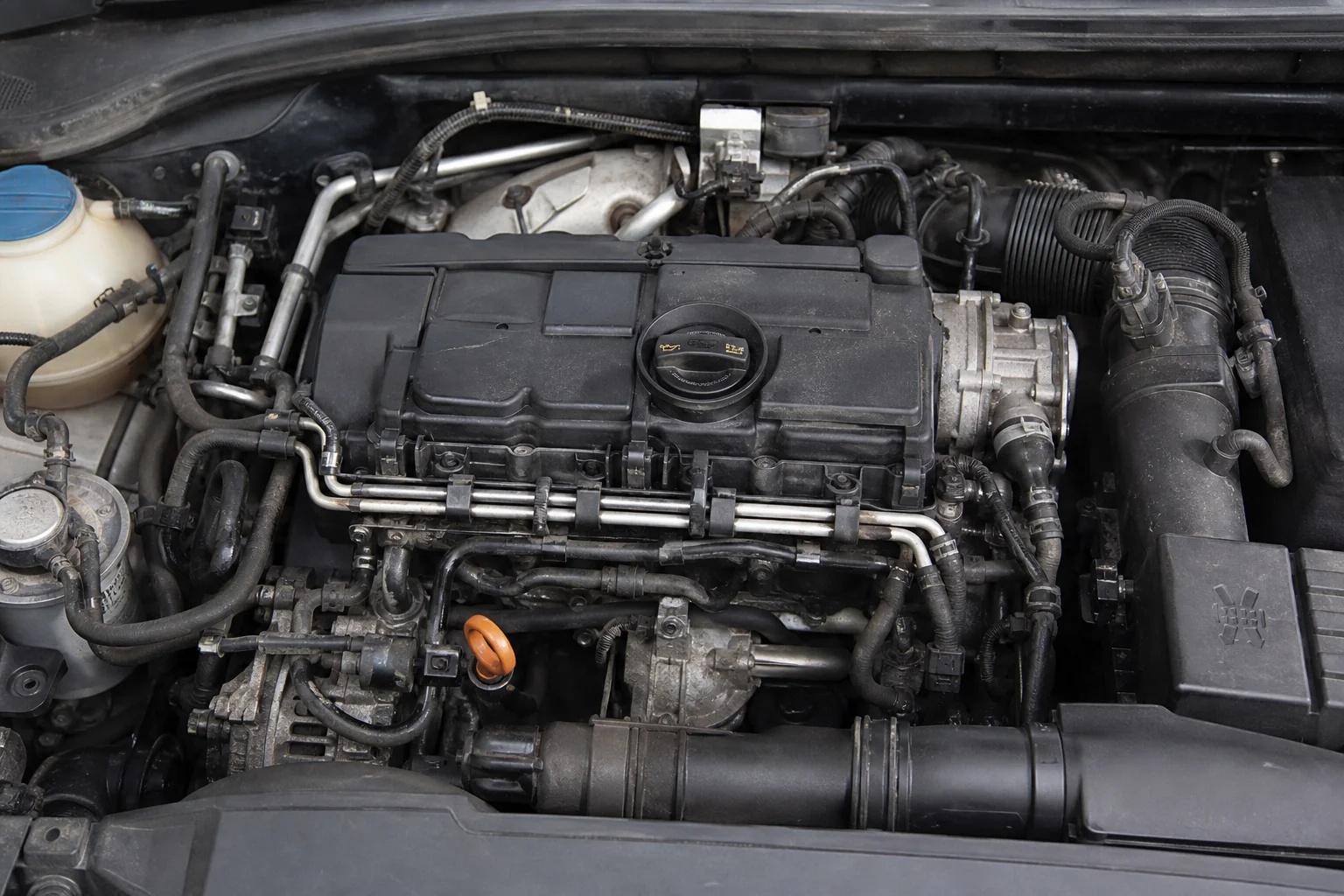
A 2.0 TDI remap on the EA288 typically adds 40 bhp and 80 Nm to the 150 bhp version — from £150 at FLR with diagnostics included. VW Group sells the same basic hardware at 115, 150 and 184 bhp, so Stage 1 works within proven factory territory. It is the UK's best towing upgrade, often adds 1–3 mpg on a sensible right foot, and every map keeps DPF, EGR and AdBlue fully active. DSG cars should take the from-£275 bundle. Golf-specific figures: Golf TDI & GTD guide.
The Short Answer
Should you remap your 2.0 TDI? If it is healthy — yes, and the case is about as clean as tuning gets. The EA288 is built in colossal numbers, calibrated conservatively for fleet economy targets, and sold at three different outputs from near-identical hardware. The 150 bhp car you own and the 184 bhp car in the same brochure differ mostly in software. A custom Stage 1 closes that gap and then uses the genuine margin above it — carefully.
At Finish Line Remaps, Stage 1 from £150 includes diagnostics, a custom-written file for your exact engine code, a permanent factory backup and post-flash verification. Background: what a Stage 1 remap actually changes.
Typical Stage 1 Gains by Model
Figures are typical results on a healthy, standard car. Engine codes and software versions vary across the range, so we confirm from your VRN before booking:
| Model | Stock | Typical Stage 1 |
|---|---|---|
| Golf / Leon / A3 2.0 TDI 150 | 150 bhp / 340 Nm | ~190 bhp / 420 Nm |
| Passat / Superb 2.0 TDI 150 | 150 bhp / 340 Nm | ~190 bhp / 420 Nm |
| Tiguan / Kodiaq 2.0 TDI 150 | 150 bhp / 340 Nm | ~190 bhp / 420 Nm |
| GTD / Octavia vRS TDI (184) | 184 bhp / 380 Nm | ~215 bhp / 440 Nm |
| Passat / A4 2.0 TDI 190 | 190 bhp / 400 Nm | ~220 bhp / 450 Nm |
The 115 bhp entry version also responds well — typically reaching around 150 bhp — but we quote it case by case because hardware differences matter more at that end of the range. Golf-specific detail lives in the Golf TDI & GTD guide.
What It Actually Feels Like
The EA288's factory calibration has a flat spot everyone recognises: the pause below 1,800 rpm, then the surge, then breathlessness past 4,000. Stage 1 smooths all three. The torque arrives earlier and stays longer, which in real driving means fourth gear does what fifth used to, and a loaded Tiguan stops hesitating at roundabout exits. It is not a character transplant — it is the engine the car always should have had.
The Towing Case — Where the TDI Earns Its Keep
Ask what the best towing upgrade in the UK is and the honest answer is software on a healthy 2.0 TDI. The extra 60–80 Nm lands at 1,750–2,500 rpm — precisely the band a caravan outfit or trailer uses climbing out of the Ribble Valley. Hills stop demanding second-to-third shuffling, overtakes stop being leaps of faith, and the whole outfit feels planted. Passat, Superb, Tiguan and Kodiaq owners book this more than any other group. The full towing picture, including weight and licence facts: remapping for towing and our shortlist of the best cars to remap for towing.
The Economy Case
Driven sensibly, a remapped TDI typically returns the same or slightly better economy — owners commonly report 1–3 mpg — because the engine reaches cruising load with less throttle input. High-mileage drivers who want the bias pushed further towards MPG should look at an economy-focused calibration. The honest detail, including why driving style dominates: economy remap fuel savings.
Known 2.0 TDI Checks Before We Flash
| Item | Why it matters | How we check |
|---|---|---|
| DPF health | Short-trip British life clogs filters — more torque on a struggling DPF helps nobody | Soot load, regeneration history, differential pressure — see DPF regeneration guide |
| EGR valve and cooler | The classic EA288 restriction; coking blunts response and triggers limp mode | Live data flow analysis, fault memory — see EGR valve explained |
| Turbo and VNT actuation | Boost stability underwrites every figure above | Boost trace on road test — see turbo health guide |
| AdBlue / SCR system | Must be healthy and stays fully active after tuning | Fault memory, dosing behaviour — see AdBlue & SCR explained |
| DSG adaptations (where fitted) | A worn DQ381/DQ250 should be assessed before more torque | Adaptation values, shift quality on road test |
Who Should NOT Remap Their 2.0 TDI
- Cars with active DPF, EGR or boost faults — fix first, then tune. That is what diagnostics from £40 is for.
- School-run-only cars already fighting regeneration — software does not fix a duty-cycle mismatch; read our short-trip diesel guide first.
- Cars under manufacturer warranty where goodwill matters more — understand the dealer-flag reality in our warranty guide.
- Anyone unwilling to declare the remap to insurance — non-negotiable.
How We Tune a 2.0 TDI at FLR
- VRN quote. Registration in, exact engine code and gearbox identified, honest expectations and price out.
- Diagnostics first. Fault memory, live data, boost behaviour, DPF and EGR assessment, DSG adaptations where fitted. Included with every Stage 1.
- Custom calibration. Factory file read and archived for life, then a file written for your exact engine code — never a generic download. See custom tuning.
- Verification. Post-flash live data, road test, written handover and aftercare advice.
Next Steps
A healthy EA288 with a custom Stage 1 is the most sensible money in UK tuning — and if you tow, it is not close. Related reading: the VW & Audi remapping guide for the wider engine picture, the best cars to remap in the UK to see how the EA288 ranks, and is Stage 1 worth it on a daily diesel if you are still weighing it up. Ready? Send your VRN via the contact page or call 01706 404 357. Workshop in Haslingden, mobile across Lancashire and the North West.
2.0 TDI Remapping — Common Questions
The 150 bhp EA288 typically reaches around 190 bhp and 420 Nm at Stage 1 on a healthy engine — roughly 40 bhp and 80 Nm over stock. The 184/190 bhp versions typically reach around 215 bhp and 440 Nm. We confirm expectations for your exact engine code from the registration.
It is probably the single most remapped engine in the UK, and for good reason: VW Group sells near-identical hardware at 115, 150 and 184 bhp, so a custom Stage 1 on the lower outputs works entirely within proven factory territory. Healthy examples respond with exactly the mid-range torque these cars are bought for.
Stage 1 is from £150 at Finish Line Remaps, including diagnostics, a custom-written file for your exact engine code, a permanent factory backup and post-flash verification. DSG tuning is from £150 and the engine-plus-DSG bundle is from £275.
Excellent — it is one of the most popular reasons owners book one. The extra 60–80 Nm arrives exactly where a caravan or trailer needs it, so hills stop demanding downshifts and the whole outfit feels more stable and less stressed. See our towing remap guide for the full picture.
Often slightly, driven sensibly — more torque at low revs means less throttle for the same road speed. Owners typically report 1–3 mpg improvements on a calm right foot. Drive harder and economy drops; the remap gives you the choice.
A properly written Stage 1 keeps DPF, EGR and AdBlue systems fully active and MOT-compliant. What matters is that those systems are healthy before tuning — a TDI already struggling with regeneration needs that fixed first, which is exactly what the included diagnostics checks.
On DSG cars, yes — it is the difference between a good result and a complete one. The gearbox calibration assumes stock torque; matching it sharpens shifts and stops the box short-shifting around the new delivery. The engine-plus-DSG bundle from £275 covers both.
Yes. A remap is a material modification in the UK and must be declared. Undeclared tuning can invalidate the policy entirely. On a family TDI the premium change is usually modest.